
Children do not always know when something is wrong with their eyesight. A child may struggle to see the classroom board, sit very close to the television, or complain of headaches without realising that the problem could be related to their eyes.
Sometimes, there are no clear signs at all.
This is why choosing a qualified pediatric ophthalmologist is important. Children’s eyes are still developing, and some vision problems need attention before they begin to affect normal visual development.
At Orbit Eye Center, we understand that parents want clear answers about their child’s eye health. Whether your child needs a routine eye examination or has a specific eye condition, proper assessment by a doctor experienced in children’s eye care can help identify the problem and guide the next steps.
What Does a Pediatric Ophthalmologist Do?
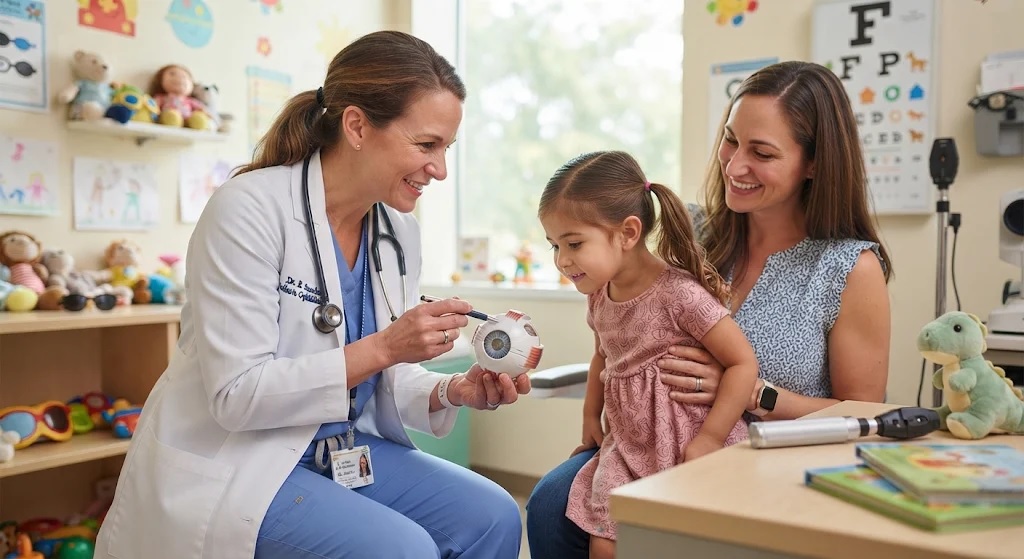
A pediatric ophthalmologist is a medical eye specialist who focuses on eye health and vision problems in babies, toddlers, children, and teenagers.
Children are not simply small adults when it comes to eye care. Their visual system continues to develop as they grow. Some conditions can affect this process if they are not recognised and treated at the right time.
A pediatric eye specialist examines the eyes, checks how well a child can see, and looks for problems that may affect normal vision.
Common conditions treated by a pediatric ophthalmologist include:
- Lazy eye (amblyopia)
- Squint or crossed eyes (strabismus)
- Short-sightedness (myopia)
- Long-sightedness (hyperopia)
- Astigmatism
- Childhood cataracts
- Congenital eye conditions
- Blocked tear ducts
- Eye movement disorders
- Double vision and focusing problems
Some children may also need specialised care for eye conditions linked to premature birth or other medical conditions.
Why Choose a Qualified Pediatric Ophthalmologist in Dubai?
Finding an eye doctor for a child requires a little more thought than choosing a general eye care provider.
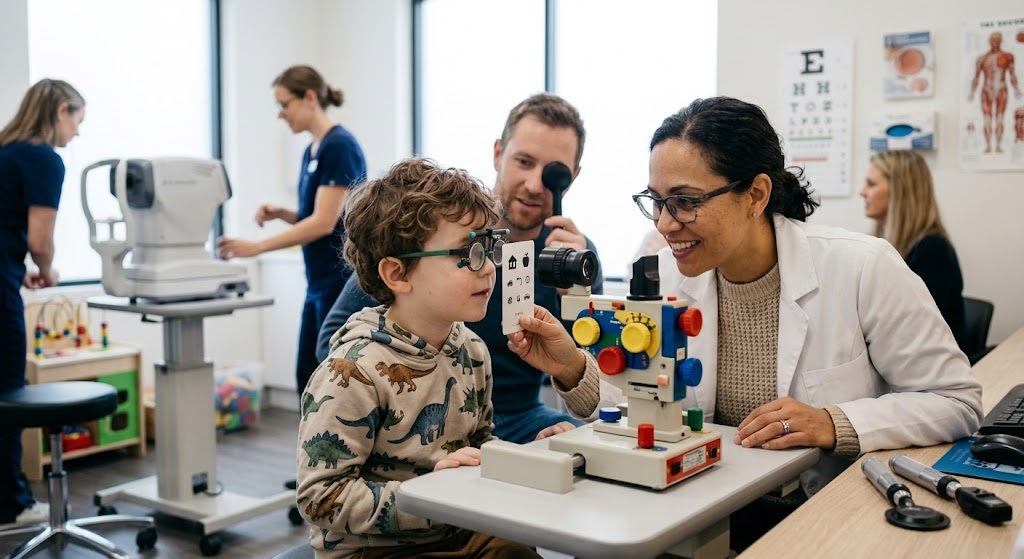
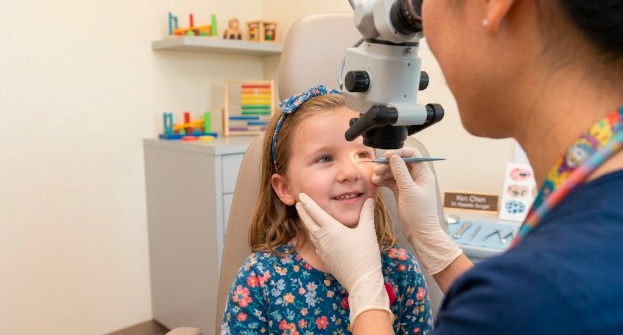
Young children may not be able to explain what they are seeing. Some cannot read an eye chart, while others may not cooperate during an examination. An experienced pediatric ophthalmologist understands these challenges and knows how to assess a child’s vision according to their age and development.
Here are a few things parents should consider.
- Medical Qualifications and Experience
Check whether the doctor has recognised medical qualifications, specialist training in ophthalmology, and experience in pediatric eye care.
Experience with childhood eye conditions is particularly important when a child has a squint, lazy eye, or another condition that needs ongoing treatment.
Parents can also check the doctor’s professional registration and relevant credentials.
- Experience in Childhood Eye Conditions
A good pediatric eye assessment should look beyond whether a child can read letters on an eye chart.
The doctor may need to examine eye alignment, focusing ability, visual development, eye movements, and the overall health of the eyes.
For example, a child with a squint may also have amblyopia. Treating the eye alignment alone may not address the reduced vision in one eye.
- Child-Friendly Eye Examinations
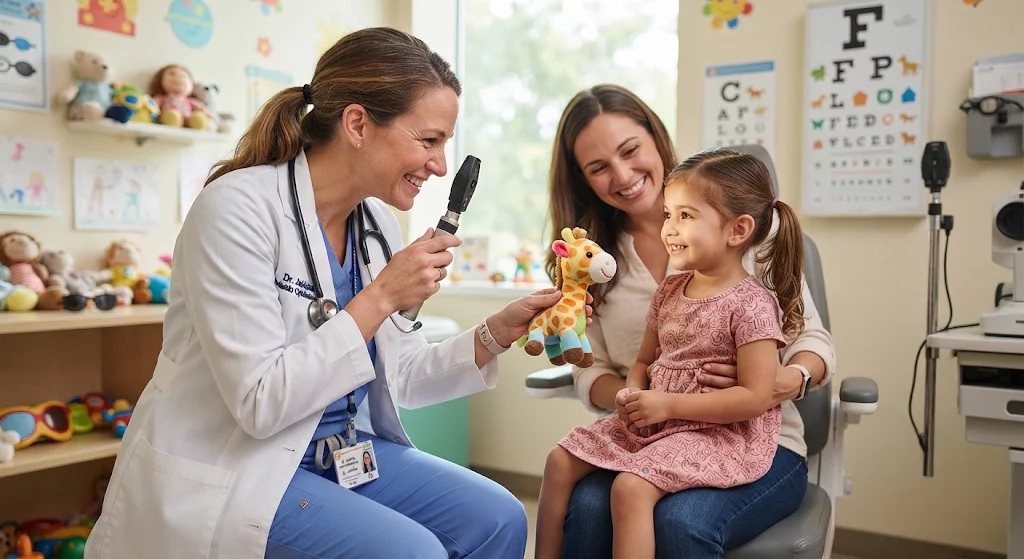
A hospital or eye clinic that regularly treats children should understand how to make examinations easier for young patients.
The approach may be different for a baby, a three-year-old, and a teenager.
Depending on the child’s age and needs, the examination may include picture-based vision tests, special eye drops, a refraction test, or other assessment methods.
- A Clear Treatment Plan
Parents should understand what the doctor has found and what needs to happen next.
Some children only need glasses and regular monitoring. Others may require lazy eye treatment, patching, medication, or squint surgery.
A qualified specialist should explain the available options in simple language and discuss the expected follow-up.
Common Eye Problems That Need Pediatric Eye Care
Many childhood eye conditions can be managed successfully when identified early. However, their treatment depends on the cause, the child’s age, and the severity of the condition.
Lazy Eye (Amblyopia)
Lazy eye is one of the most common vision development problems in children.
It occurs when one eye does not develop normal vision. The brain starts relying more on the stronger eye, while the weaker eye receives less visual input.
Amblyopia can develop because of a squint, a difference in prescription between the two eyes, or other conditions that interfere with normal vision.
Treatment may include:
- Prescription glasses
- Eye patching
- Atropine eye drops
- Other selected treatment methods
The earlier the condition is identified, the better the opportunity to support normal visual development. However, older children and teenagers may also benefit from treatment.
Squint or Strabismus
A squint happens when both eyes do not point in the same direction. One eye may turn inward, outward, upward, or downward.
Some children have a squint all the time, while others only develop it when tired or looking in a particular direction.
Parents should not assume that a squint will disappear as their child grows.
Depending on the cause, treatment may involve glasses, amblyopia treatment, monitoring, or squint surgery.
A pediatric ophthalmologist can assess the eye alignment and decide which approach is suitable.
Short-Sightedness (Myopia)
Myopia is becoming an important concern in childhood eye care.
Children with myopia can usually see nearby objects clearly but have difficulty seeing things at a distance. They may sit close to the television or struggle to read information on the classroom board.
A child’s myopia can change as the eyes grow. Regular eye examinations help monitor these changes.
Depending on the child’s age and prescription, the doctor may discuss myopia management options, including specially designed glasses, contact lenses, or other suitable treatments.
Astigmatism and Long-Sightedness
Astigmatism occurs when the eye’s focusing surfaces have an uneven shape, which can cause blurred vision.
Long-sightedness, also called hyperopia, makes it harder to focus on nearby objects in some cases.
Not every child with these refractive errors needs glasses. The decision depends on the degree of the prescription, symptoms, and whether the condition affects normal visual development.
A proper pediatric eye examination helps determine whether treatment is needed.
When Should Your Child Visit a Pediatric Eye Specialist?
Not every childhood eye problem is easy to notice.
Parents should consider arranging an eye examination if they observe any of the following:
- One eye appears to turn in or out.
- The child frequently rubs their eyes.
- They sit unusually close to screens or books.
- They close one eye when looking at something.
- They tilt their head to see more clearly.
- They complain of headaches or blurred vision.
- They have difficulty recognising distant objects.
- One eye appears different from the other.
- Their eyes frequently water or appear unusually sensitive to light.
Some eye conditions may develop without obvious symptoms. A child who seems to see normally can still have a difference in vision between the two eyes.
If you notice a sudden change in vision, a new squint, a white appearance in the pupil, or eye pain, seek prompt medical assessment.
What Happens During a Pediatric Eye Examination?
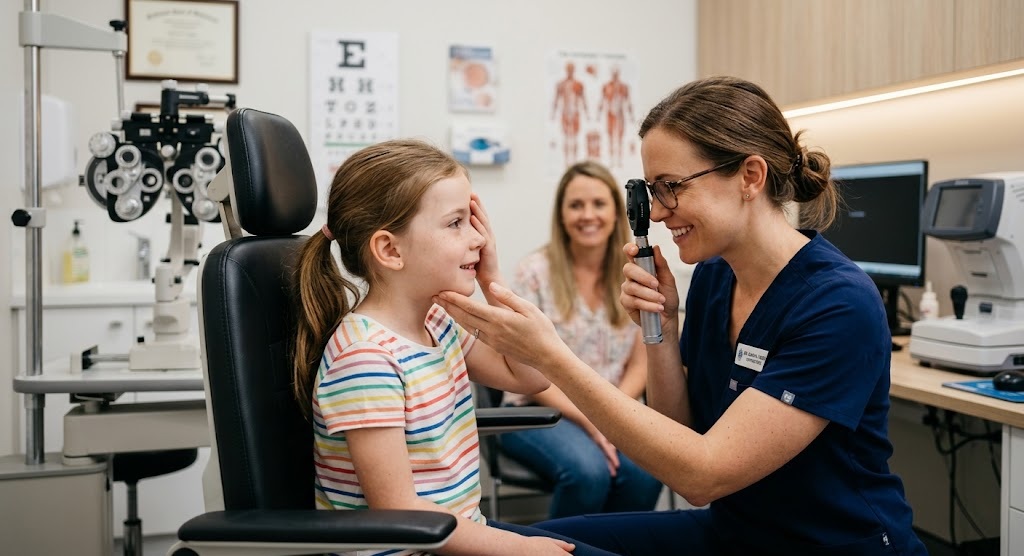
Parents sometimes worry that their child may not cooperate during an eye test. In reality, pediatric eye examinations can be adapted to different ages.
The specialist may begin by asking about the child’s medical history, birth history, family history of eye problems, and any concerns noticed at home or school.
The examination may include:
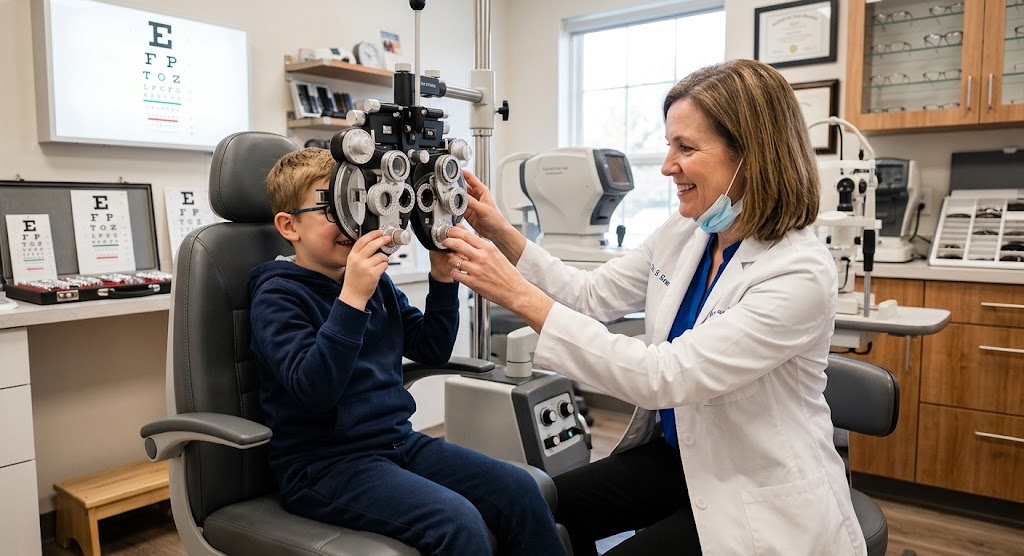
Visual acuity test: Checks how clearly the child can see. Depending on age, the doctor may use letters, numbers, pictures, or other methods.
Eye alignment test: Checks whether both eyes are working together and pointing in the correct direction.
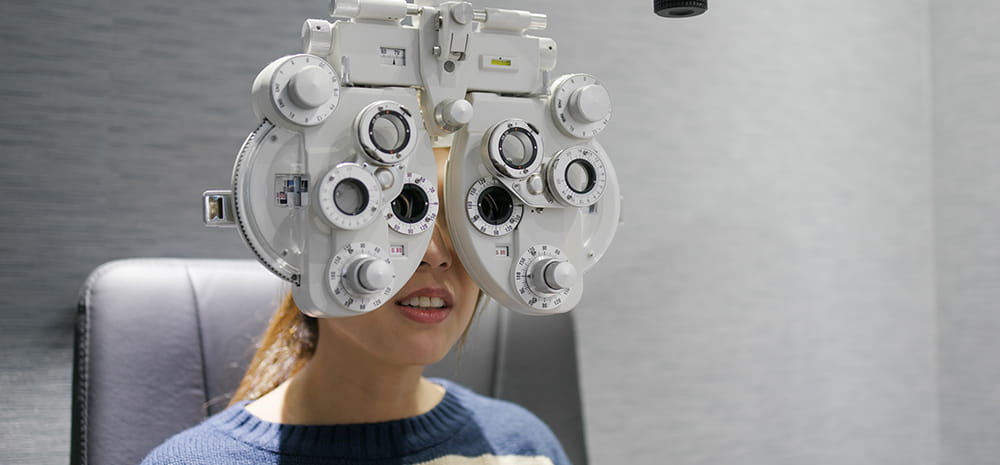
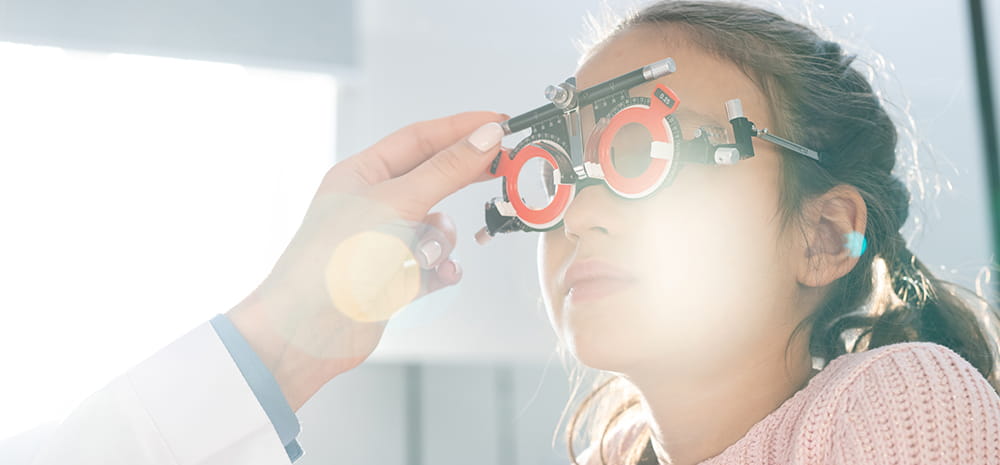
Refraction test: Measures whether the child needs glasses for myopia, hyperopia, or astigmatism.
Pupil and eye movement assessment: Checks how the pupils respond to light and how the eyes move.
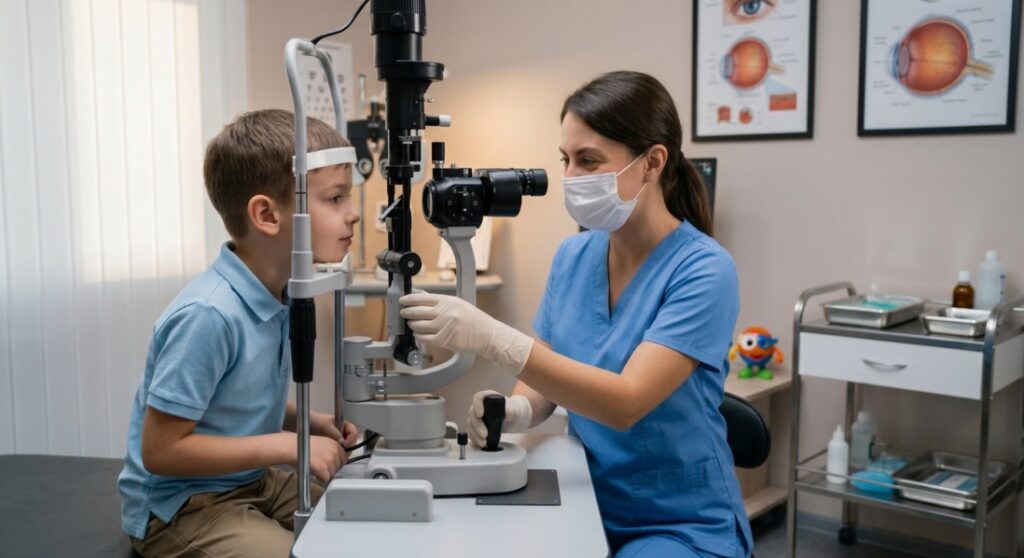
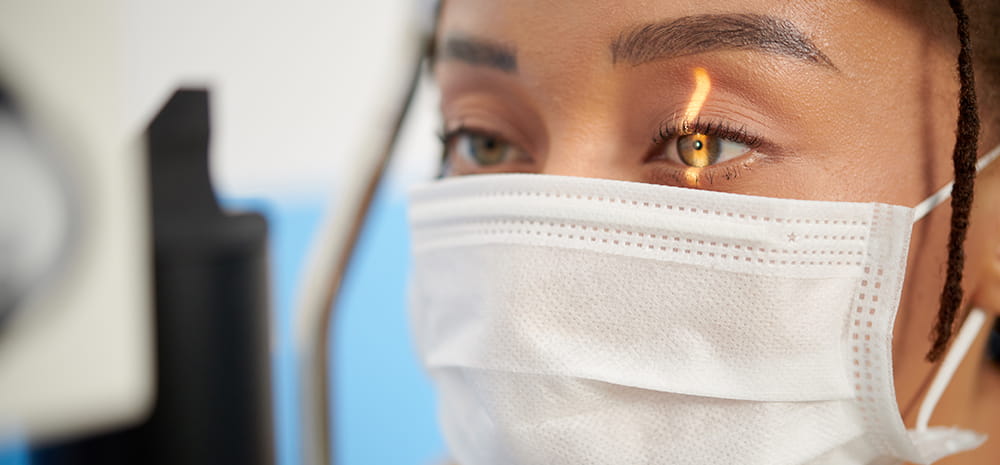
Eye health examination: Allows the doctor to examine the structures of the eyes and look for signs of other conditions.
In some cases, special eye drops are used to relax the focusing muscles and obtain a more accurate glasses prescription.
The tests depend on the child’s age, symptoms, and examination findings.
What Does Recent Research Say About Children’s Eye Health?
Medical research continues to improve how doctors detect and manage childhood vision problems.
Several recent publications highlight why early assessment and the right testing methods matter.
2025 Research on Instrument-Based Vision Screening
A report published by the American Academy of Ophthalmology (AAO) in November 2025 examined the use of instrument-based screening to detect amblyopia and its risk factors.
The researchers reviewed 33 studies involving 28,072 children.
The assessment looked at how accurately screening devices could identify children who might have amblyopia or conditions that increase its risk.
This research adds to the evidence supporting the use of appropriate screening tools in childhood eye care. However, screening is not a replacement for a complete examination by an eye specialist when a problem is suspected.
2025 Update on Preschool Vision Screening
A research paper titled Recommended Practices for Vision Screening in Pre-school-age Children: A 2025 Update was published in the journal Optometry and Vision Science in October 2025.
The paper was prepared by researchers associated with the National Center for Children’s Vision and Eye Health at Prevent Blindness.
It reviewed recommended approaches to vision screening in young children, with attention to identifying children who may need further assessment.
This is particularly relevant because some vision problems develop before children are old enough to explain that they cannot see properly.
Updated Amblyopia Treatment Guidance
The American Academy of Ophthalmology updated its Amblyopia Preferred Practice Pattern in February 2024.
The updated guidance discusses different treatment options, including glasses, patching, atropine eye drops, and selected digital treatments.
It also highlights that some children with moderate amblyopia respond well to initial treatment with two hours of daily patching or weekend atropine.
Importantly, the guidance recognises that older children and teenagers who have not previously received treatment may still benefit from amblyopia care.
These developments show why treatment should be based on a proper diagnosis rather than assuming that every child with lazy eye needs the same approach.
How Often Should Children Have Their Eyes Checked?
The timing of an eye examination depends on the child’s age, health, family history, and any existing vision concerns.
The American Academy of Ophthalmology and the American Association for Pediatric Ophthalmology and Strabismus recommend regular vision screening during childhood.
Some important stages include:
- Newborn stage: Basic eye health assessment, including checking the red reflex.
- Infancy and toddler years: Regular assessment of eye health, eye movements, and visual behaviour.
- Between 3 and 5 years: Vision and eye alignment screening, with referral for a full examination when needed.
- From age 5 onwards: Regular vision checks, generally every one to two years through routine screening, depending on the child’s needs.
Children with known eye conditions or specific risk factors may need more frequent examinations.
The World Health Organization also published its Vision and Eye Screening Implementation Handbook in 2024, providing evidence-based guidance on screening children and other groups for vision problems.
Pediatric Eye Care at Orbit Eye Center, Dubai
Choosing the right eye clinic is an important decision for parents.
At Orbit Eye Center, we provide specialised eye care for children and focus on identifying and managing conditions that can affect their vision and eye development.
Our pediatric ophthalmology services include assessment and management of conditions such as lazy eye, squint, refractive errors, and other childhood eye problems.
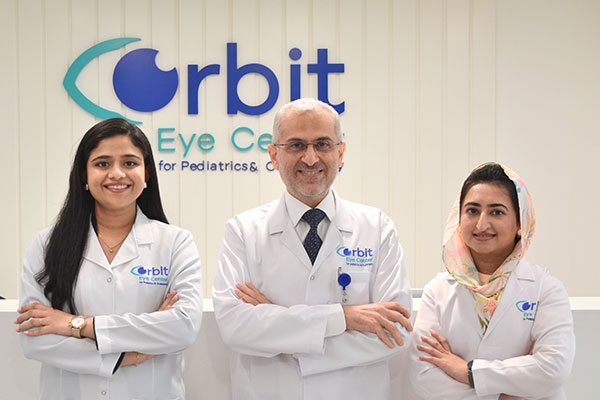
Dr. Walid Abdalla is associated with pediatric ophthalmology and strabismus care at Orbit Eye Center.
Whether your child needs a routine eye check, a second opinion about a squint, or an assessment for lazy eye, an appropriate examination can help establish the cause and guide treatment.
We believe parents should have a clear understanding of their child’s eye condition, the available treatment options, and the importance of follow-up visits.
If you are looking for a qualified pediatric ophthalmologist in Dubai, contact Orbit Eye Center to discuss your child’s eye care needs.
Frequently Asked Questions
- What qualifications should a pediatric ophthalmologist have?
A pediatric ophthalmologist should have a recognised medical degree, specialist training in ophthalmology, and appropriate experience or additional training in children’s eye conditions. Parents should check the doctor’s credentials and professional registration.
- At what age should a child first visit an eye doctor?
A newborn should receive a basic eye health assessment. Formal vision testing is introduced when a child is developmentally ready, often around three to four years of age. Earlier specialist assessment may be needed if there are signs of an eye problem or specific risk factors.
- Can a pediatric ophthalmologist treat lazy eye?
Yes. Pediatric ophthalmologists diagnose and manage amblyopia. Depending on the cause, treatment may involve glasses, patching, atropine drops, or other suitable methods.
- Is squint surgery always necessary for children?
No. Some children can be managed with glasses or other treatments. Surgery may be recommended when appropriate, depending on the type and degree of eye misalignment.
- Can older children still receive treatment for lazy eye?
Yes. Although early treatment is generally preferred, research and clinical guidance show that some older children and teenagers can still benefit from amblyopia treatment.
- Why is a pediatric ophthalmologist different from a general eye doctor?
A pediatric ophthalmologist is a medical doctor specialising in eye conditions affecting children. Their training and clinical experience cover childhood eye development, squint, amblyopia, and other conditions that may require medical or surgical treatment.
- Where can I find a qualified pediatric ophthalmologist in Dubai?
Parents can contact Orbit Eye Center in Dubai to enquire about pediatric ophthalmology services and arrange an assessment with the appropriate specialist.
References and Medical Sources
- American Academy of Ophthalmology (AAO) – Instrument-Based Screening for the Detection of Amblyopia and Amblyopia Risk Factors, Ophthalmology, November 2025.
- Pang Y. et al. – Recommended Practices for Vision Screening in Pre-school-age Children: A 2025 Update, Optometry and Vision Science, October 2025. DOI: 10.1097/OPX.0000000000002290.
- American Academy of Ophthalmology – Amblyopia Preferred Practice Pattern, updated February 2024.
- American Academy of Ophthalmology and American Association for Pediatric Ophthalmology and Strabismus – Vision Screening for Infants and Children, 2022.
- World Health Organization – Vision and Eye Screening Implementation Handbook, 2024.
Medical information in this article is for general educational purposes. Diagnosis and treatment should be based on an individual examination by a qualified eye care professional.