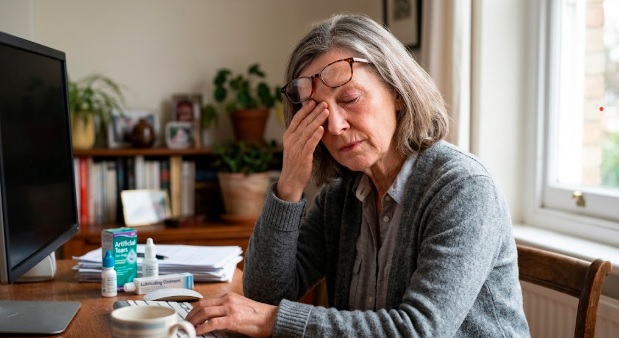

Someone asked us recently whether the summer heat was making their eyelids droop more than usual. It’s not a question we get often, but it’s not a bad one either. Heat, dehydration, and dry eye all genuinely make eyelids look heavier by the end of the day, and in Dubai specifically, the swing between outdoor heat and indoor air conditioning does more to the skin around the eyes than people tend to assume. So the honest answer is: sometimes it really is just fatigue, and no, that doesn’t need surgery.
But there’s a difference between eyelids that look tired and eyelids that are actually drooping, and it’s worth knowing which one you’re dealing with before deciding it’s purely cosmetic.
Two different things get called “droopy eyelids”
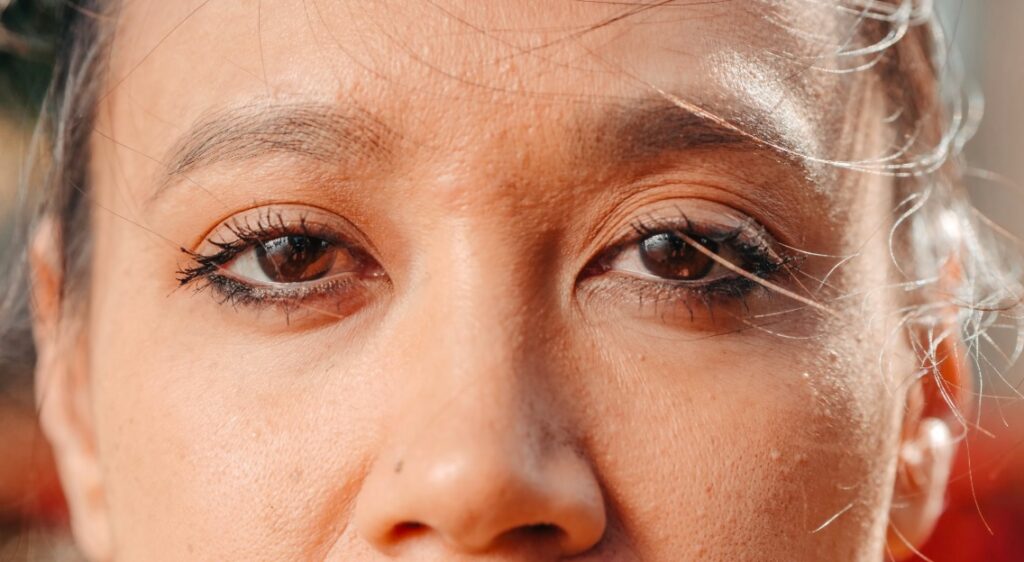
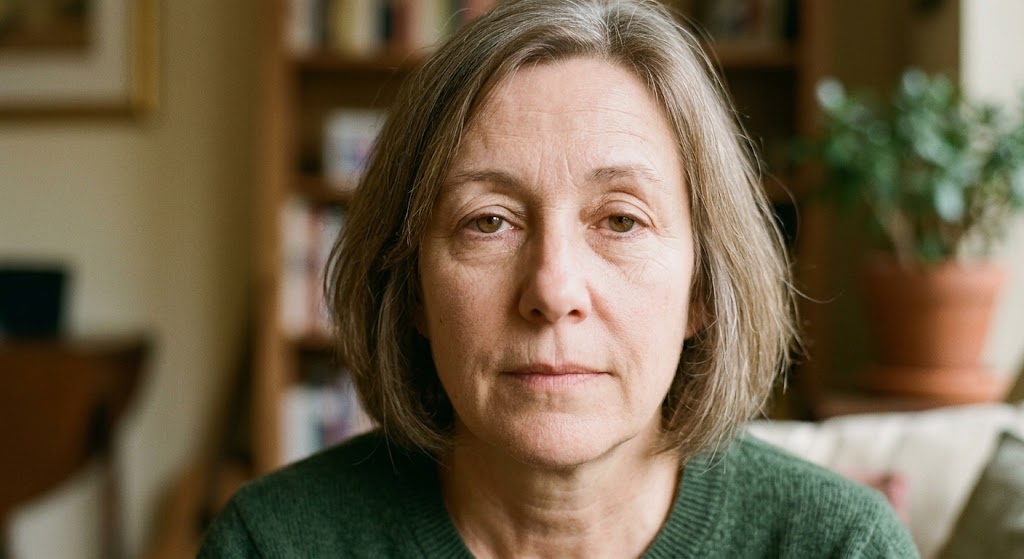
The more common one is dermatochalasis, which is just excess, loose skin on the upper lid that develops with age, sun exposure, and general skin elasticity loss. It can make the eyes look smaller or more tired but usually doesn’t affect vision unless it’s advanced enough to hang over the lash line.
The less common but more functionally significant one is ptosis, where the eyelid muscle itself is weaker or has stretched, so the lid actually sits lower on the eye rather than just having extra skin on top of it. Ptosis can genuinely narrow the field of vision, particularly in the upper and outer parts of sight, and people often adapt to it so gradually that they don’t notice until someone points out they’re tilting their chin up or raising their eyebrows constantly to compensate.
The distinction matters because dermatochalasis is frequently elective, while ptosis that’s affecting vision has a functional case for correction, and insurance treatment sometimes differs accordingly. Neither one is an emergency, and we’d rather a patient come in and be told “this is mild and doesn’t need anything yet” than assume the worst from a mirror check at home.
What blepharoplasty actually involves
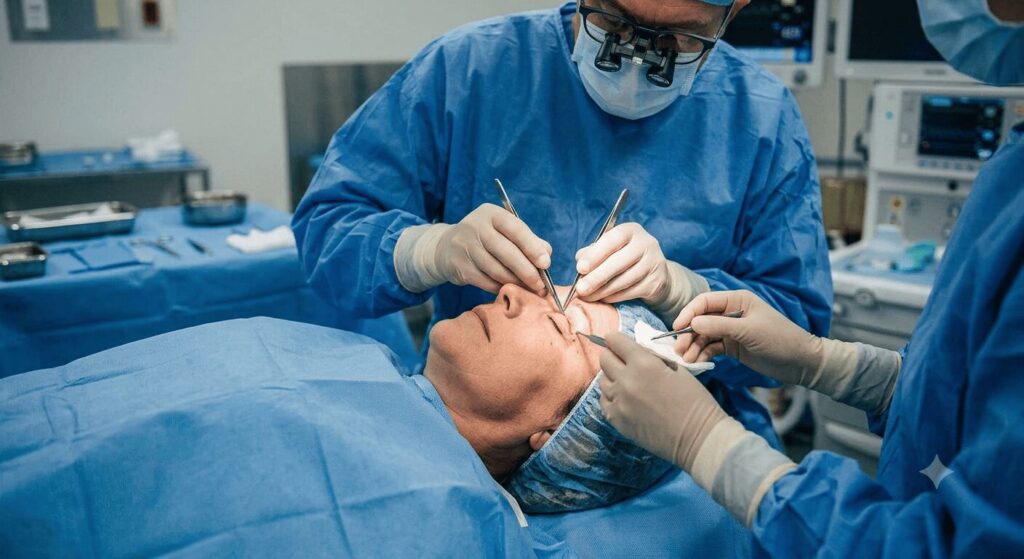
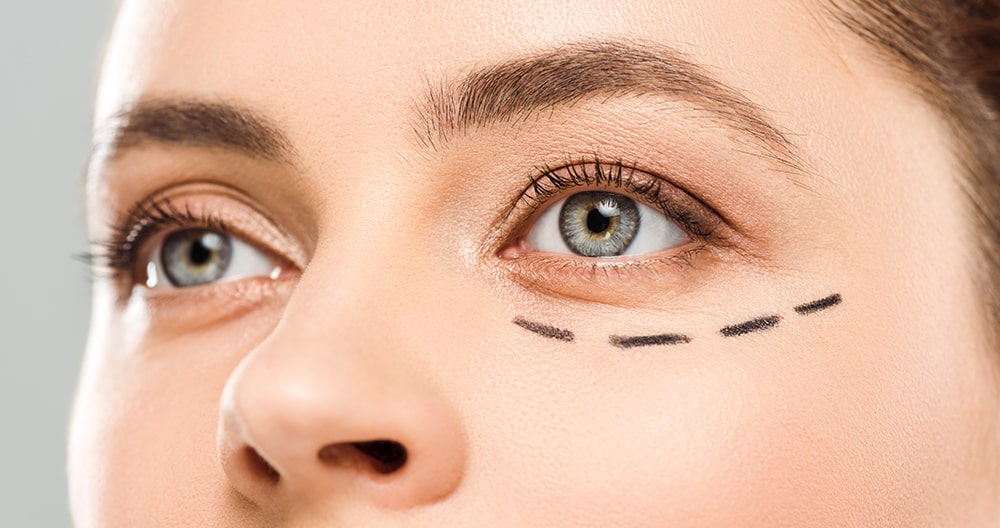
Blepharoplasty is the surgical removal of the excess skin (and sometimes fat) on the upper or lower lid. For upper lid cases, it’s often done under local anesthesia, takes under an hour, and the incision is placed along the natural eyelid crease so it heals into an inconspicuous line. Lower lid work is a bit more involved and is usually about fat repositioning rather than skin removal.
Recovery in a climate like Dubai’s needs a bit more planning than the standard advice you’ll find online
Most general guidance on blepharoplasty recovery assumes a milder, less humid environment. Here, a few things matter more:
- Swelling tends to linger longer in heat and humidity, so the “back to normal in a week” timeline some patients expect is often closer to ten days to two weeks for the visible bruising to fully settle
- Sun exposure needs to be avoided more strictly than usual, both because UV slows healing and because the incision line is more visible against sun-darkened skin while it’s still fresh
- Indoor air conditioning dries out healing skin and the eyes themselves, so lubricating drops matter more here than they might in a wetter climate
- Swimming, including pools, is off the table for at least two weeks, longer than patients used to Dubai’s year-round pool culture sometimes expect
None of this makes the procedure riskier here. It just means the recovery instructions we give patients are tailored to the climate rather than copied from a generic post-op sheet.
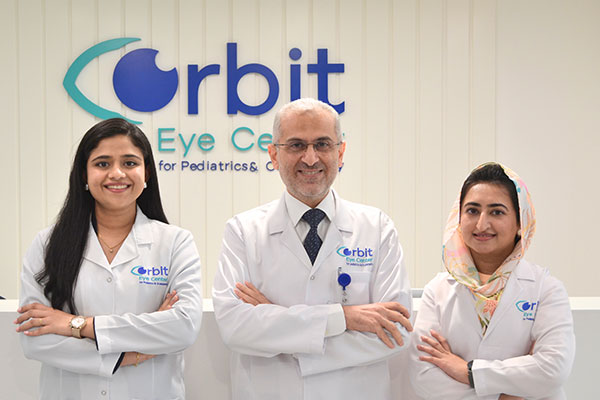
If you’re genuinely unsure whether what you’re seeing is fatigue, aging skin, or something worth addressing surgically, that’s exactly the kind of question an in-person consultation with Dr. Walid answers quickly, usually without needing to commit to anything on the first visit.
Book an oculoplasty consultation with Orbit Eye Center for Pediatrics & Oculoplasty.