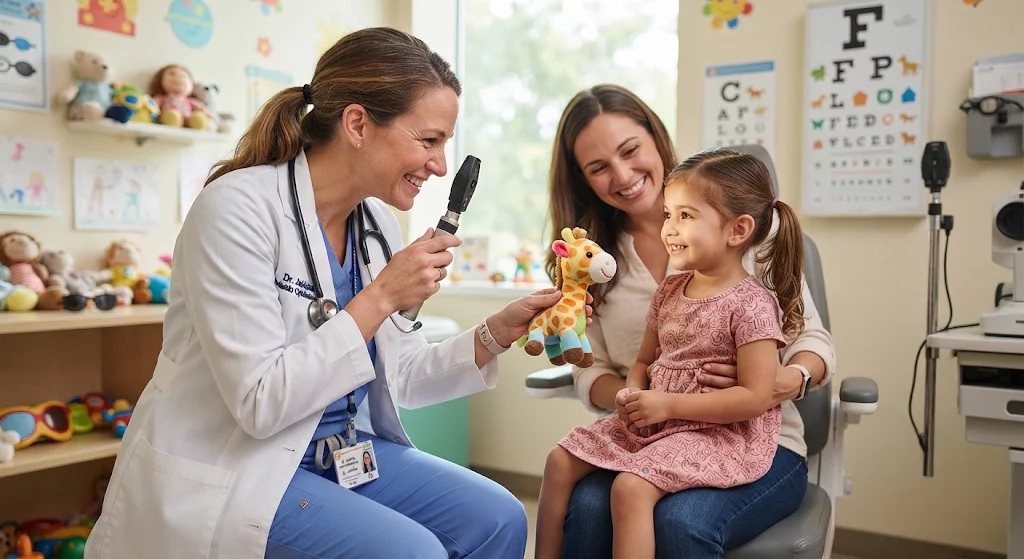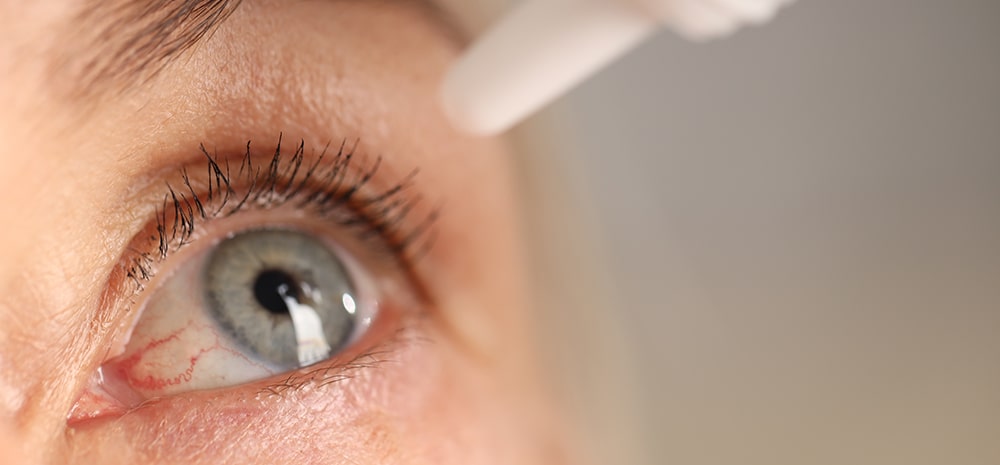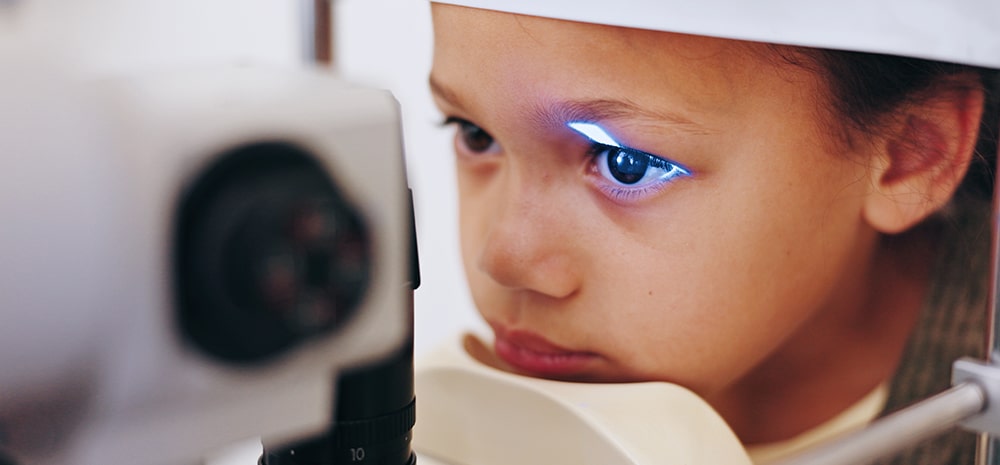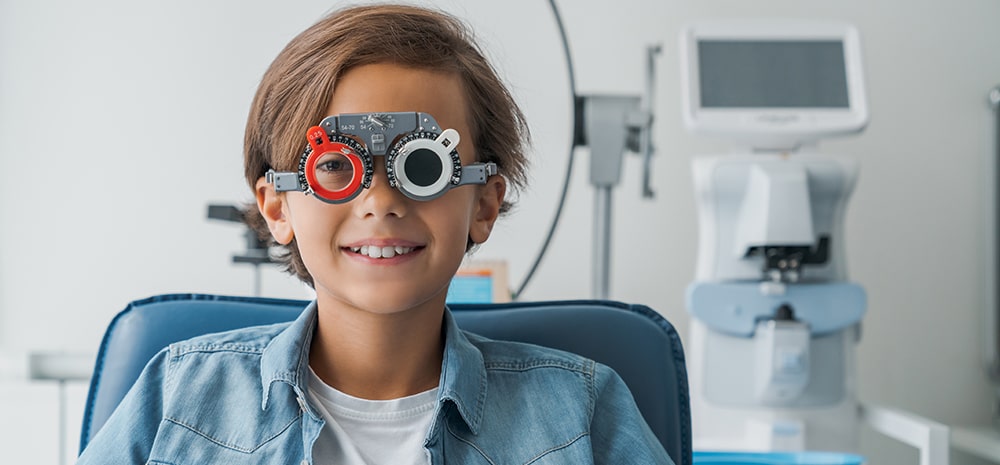

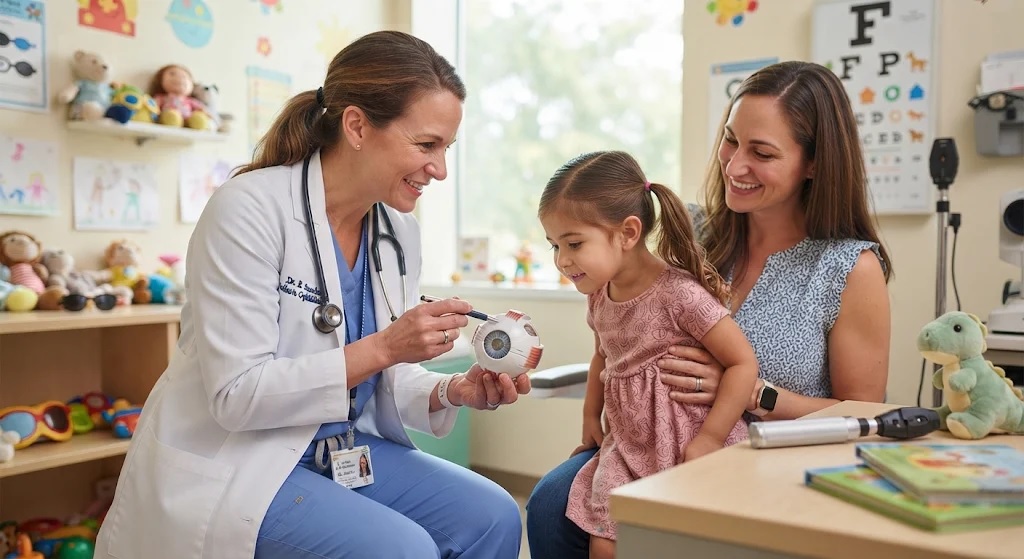
A child may have trouble seeing clearly without telling anyone. Sometimes, parents notice small changes first. Their child may sit very close to the television, keep rubbing their eyes, or struggle to recognise things at a distance.
These signs are easy to overlook, especially when a child seems otherwise healthy.
But children’s vision needs attention as they grow. Some eye problems start early and may affect how a child’s eyesight develops. Getting the right examination can make a real difference.
If you are looking for a children’s eye clinic in Dubai, it is important to choose a centre that understands the eye care needs of young patients.
At Orbit Eye Center, we focus on children’s eye health, from routine vision checks to the assessment and management of different childhood eye conditions. Our aim is to help parents understand their child’s vision and find the right care when something does not seem quite right.
Why Is a Children’s Eye Clinic Important?
Children’s eyes are still developing. Their vision changes throughout infancy and childhood, and some problems may not be obvious during the early stages.
Unlike adults, young children may not know how to explain blurred vision, double vision, or difficulty focusing. A child with poor vision in one eye may continue using the stronger eye without showing clear signs of a problem.
This is one reason why regular children’s eye examinations are important.
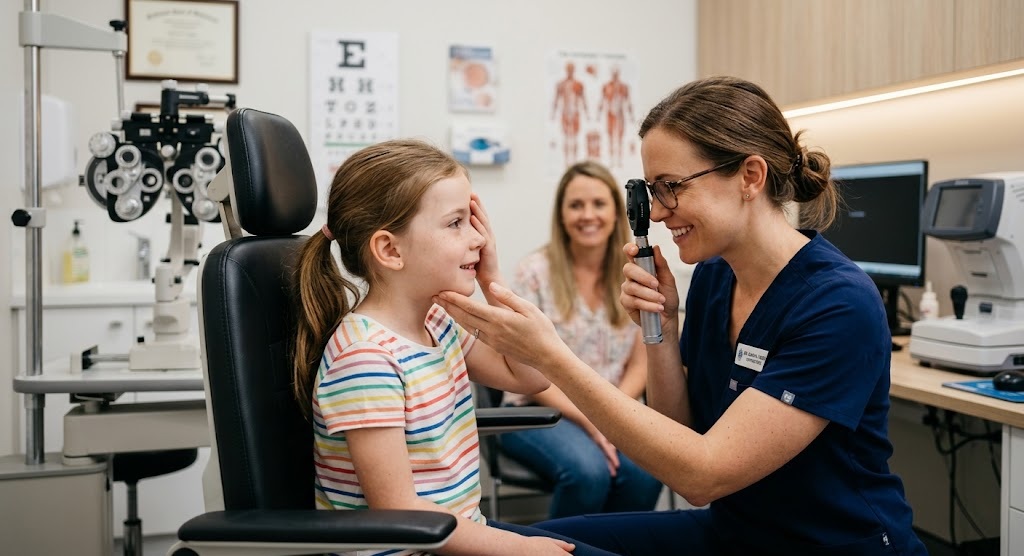
A specialised pediatric eye clinic can assess more than just how clearly a child reads letters. The examination may also look at eye alignment, focusing ability, eye movements, and the health of the eyes.
Early diagnosis can help identify conditions such as lazy eye, squint, short-sightedness, and other vision problems before they begin to affect everyday activities.
What Services Should You Expect at a Children’s Eye Clinic in Dubai?
Children may need different types of eye care depending on their age and symptoms.
A baby who has watery eyes needs a different assessment from a school-going child who cannot see the classroom board. The examination should be based on the child’s individual needs.
Some common areas of pediatric eye care include:
- Children’s Eye Examinations
A child’s first eye examination does not need to wait until they start school.
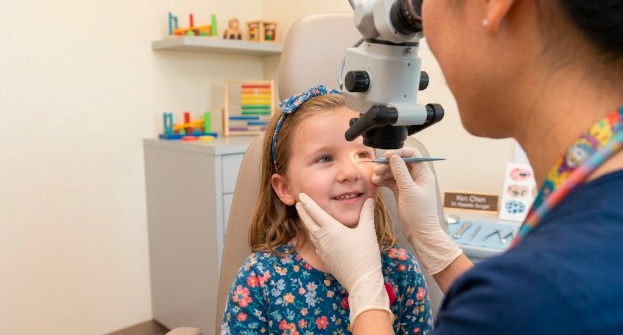
Eye checks can begin during infancy. The doctor may assess the pupils, eye movements, eye alignment, and general eye health.
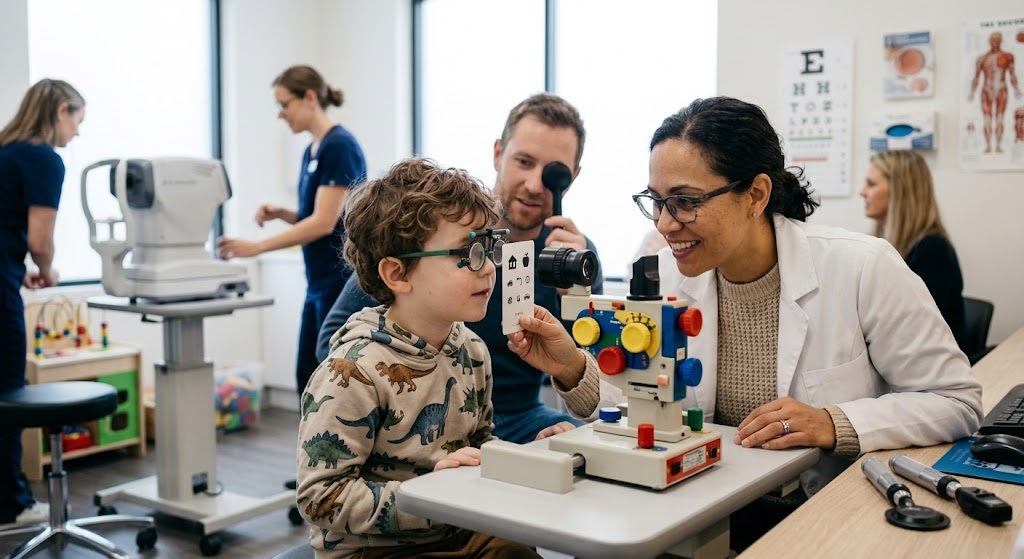
For older children, vision tests may use letters, pictures, matching games, or other age-appropriate methods.
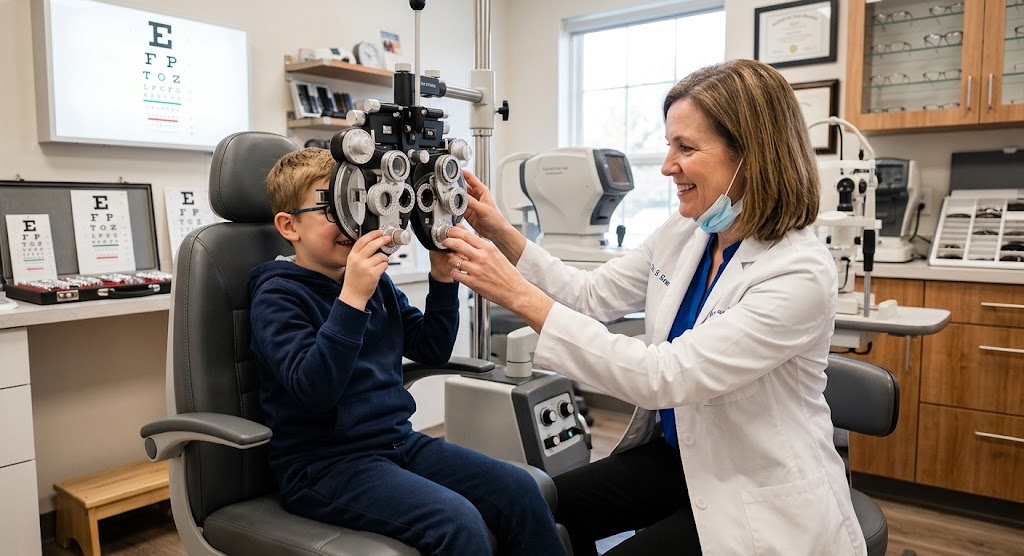
A full eye examination may also include a refraction test to find out whether the child needs glasses.
- Lazy Eye Treatment (Amblyopia)
Lazy eye, medically known as amblyopia, is a condition in which vision does not develop properly in one or sometimes both eyes.
It often develops during early childhood. A squint, unequal glasses prescription, or a problem that blocks clear vision can contribute to the condition.
Some children have no obvious symptoms. They may continue with normal activities because their stronger eye is doing most of the work.
Treatment depends on the cause and severity. It may include:
- Prescription glasses
- Eye patching
- Atropine eye drops
- Other selected treatments
The purpose is to help the weaker eye develop better vision. Regular follow-up is important to check how the child responds.
- Squint and Strabismus Treatment
A squint occurs when the eyes do not look in the same direction at the same time.
One eye may turn inward, outward, upward, or downward. It can happen constantly or only at certain times.
Parents sometimes believe that a childhood squint will correct itself. However, it should always be checked by a pediatric ophthalmologist.
Depending on the findings, treatment may involve glasses, lazy eye treatment, monitoring, or squint surgery.
The doctor will first identify the type of squint and whether the child’s vision is also affected.
- Children’s Glasses and Vision Correction
Some children need glasses from a very young age.
Common refractive errors include:
- Myopia (short-sightedness)
- Hyperopia (long-sightedness)
- Astigmatism
A child with myopia may see nearby objects clearly but struggle with distant objects. They may complain that the classroom board looks blurry.
Astigmatism can cause blurred or distorted vision, while some children with significant long-sightedness may have trouble focusing.
A proper eye test helps determine the prescription and whether glasses are needed.
- Childhood Myopia Management
Short-sightedness is becoming an increasing concern in children’s eye care.
Children who develop myopia at a young age may experience changes in their prescription as they grow.
Myopia management aims to slow its progression where appropriate. Depending on the child’s age, prescription, and individual risk factors, the ophthalmologist may discuss specially designed glasses, contact lenses, or selected medical treatments.
Parents should not start myopia control treatment without an eye examination and professional advice.
- Eye Problems in Babies and Toddlers
Babies cannot tell us when their vision is unclear. Parents and doctors therefore need to pay attention to signs of normal visual development.
Some problems that may require assessment include:
- Poor eye contact or unusual visual responses
- Eyes that do not move together
- Constant watering
- Unusual sensitivity to light
- Drooping eyelids
- A white reflection in the pupil
- Persistent eye redness
Not every sign means there is a serious problem. Still, an unusual change should not be ignored.
A white pupil reflection, in particular, needs urgent medical assessment.
Signs Your Child May Need to Visit an Eye Specialist
Children do not always complain about poor eyesight. Parents may notice changes in their behaviour instead.
Look out for the following:
- Sitting very close to the television.
- Holding books or tablets close to the face.
- Frequent eye rubbing or blinking.
- Closing one eye when looking at something.
- Tilting the head to see clearly.
- Complaining of headaches after reading.
- Difficulty seeing the classroom board.
- Losing interest in reading or drawing.
- Eyes that appear misaligned.
- Repeated complaints of blurred vision.
Some children may have a vision problem even when none of these signs are present.
If your child has a known eye condition or a family history of childhood vision problems, ask an eye specialist whether a comprehensive examination is needed.
What Happens During a Child’s Eye Examination?
Many parents worry about taking young children for an eye test. They wonder whether their child will understand the instructions or sit still during the examination.
A pediatric eye examination is adapted to the child’s age and ability.
The doctor may start by asking about the child’s health, birth history, family eye conditions, and any concerns noticed by parents.
The tests can include:
Visual acuity testing: Checks how clearly the child sees. Pictures or matching tests may be used for younger children.
Eye alignment assessment: Checks whether both eyes are pointing in the same direction.
Refraction test: Measures the child’s glasses prescription.
Eye movement assessment: Checks how well the eyes move in different directions.
Pupil examination: Checks how the pupils respond to light.
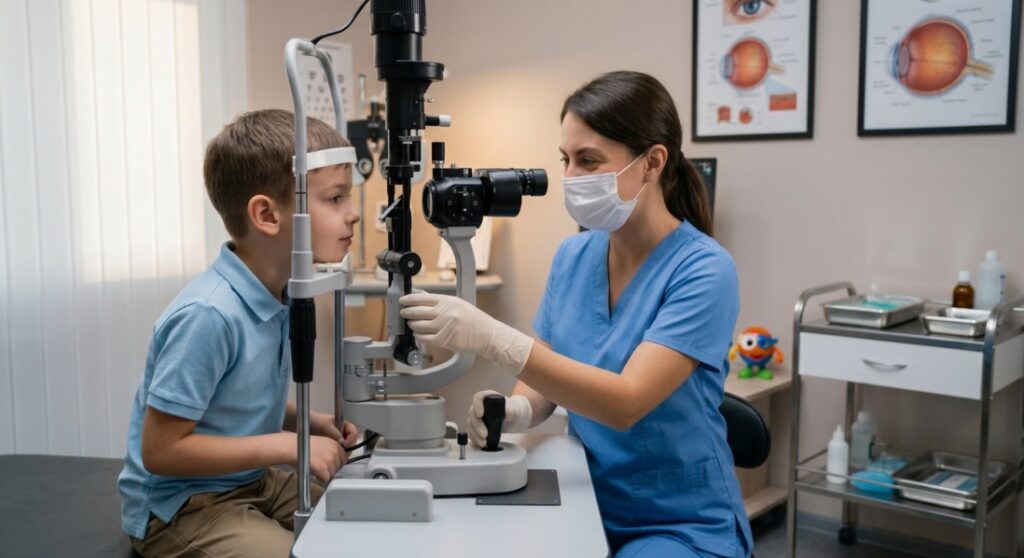
Internal eye examination: The doctor may use special eye drops to widen the pupils and examine the inside of the eyes.
Not every child needs every test. The doctor decides which examinations are suitable.
Recent Research: Why Early Children’s Eye Screening Matters
Research in pediatric ophthalmology continues to improve the way childhood vision problems are detected.
Recent publications have placed particular attention on preschool vision screening, amblyopia risk factors, and the use of technology to identify children who may need further eye examinations.
Here are some important developments.
2026: New Research into Predicting Childhood Myopia
In October 2026, the American Academy of Ophthalmology reported on research presented at its annual meeting involving artificial intelligence and retinal photographs.
Researchers studied whether an AI system could use a photograph of the back of the eye to predict which children might experience faster progression of short-sightedness.
The system was trained using more than 150,000 retinal images and aimed to predict changes over the following year.
This is an interesting development for pediatric eye care because identifying children at higher risk could eventually help doctors plan closer monitoring and earlier intervention.
However, the findings are still at an early research stage. More studies are needed before this approach can become a routine part of children’s eye examinations.
2025: Updated Recommendations for Preschool Vision Screening
A research paper titled Recommended Practices for Vision Screening in Pre-school-age Children: A 2025 Update was published in Optometry and Vision Science on 29 August 2025.
The recommendations were developed by the National Center for Children’s Vision and Eye Health at Prevent Blindness.
The paper recommends annual vision screening for children aged three to under six years.
It also highlights the importance of follow-up. A child who does not pass a screening test should receive a proper eye examination rather than simply waiting for the next routine check.
The research is especially relevant because some childhood vision problems do not cause clear symptoms in their early stages.
2025: Research on Technology-Based Amblyopia Screening
The American Academy of Ophthalmology published a report in its journal Ophthalmology in November 2025 on instrument-based screening for amblyopia and its risk factors.
The review included 33 studies involving 28,072 children.
It examined screening devices such as Plusoptix, Spot, and Retinomax. These devices can help identify children who may have risk factors for lazy eye.
The report found that instrument-based screening has value, although results can vary between devices and study settings.
This supports the role of suitable screening technology as part of early childhood eye care. It does not replace a full examination by an ophthalmologist when a problem is suspected.
How Often Should Your Child Have an Eye Check?
The right schedule depends on the child’s age, medical history, and risk of developing an eye condition.
The American Academy of Ophthalmology recommends eye health checks from birth, followed by further screening during infancy and childhood.
Some important stages include:
- Newborns: Basic eye health checks, including pupil response and the red reflex.
- 6 to 12 months: Assessment of eye movement, alignment, and visual development.
- 12 to 36 months: Checks for signs of conditions that may lead to amblyopia.
- 3 to 5 years: Vision and eye alignment screening.
- 5 years and older: Regular vision checks, with further assessment when needed.
Children with an existing eye condition may need more frequent visits.
A failed screening test, unusual eye movement, or a change in vision should be assessed rather than waiting for the next scheduled check.
Children’s Eye Care in Dubai: What Should Parents Look For?
Dubai has several eye care options, but not every clinic offers the same level of pediatric eye care.
When choosing a children’s eye clinic, parents should consider a few things.
Experience with children: The doctor should understand how childhood vision develops and how to examine young patients.
Relevant medical qualifications: Check the ophthalmologist’s recognised qualifications, specialist training, and professional registration.
Range of pediatric eye conditions: The clinic should be able to assess common problems such as lazy eye, squint, refractive errors, and other childhood eye conditions.
Clear communication: Parents should receive a clear explanation of the diagnosis, treatment choices, and follow-up needs.
Age-appropriate examinations: Testing methods should be suitable for babies, toddlers, schoolchildren, and teenagers.
These points can help parents make a more informed decision when choosing a pediatric eye specialist in Dubai.
Children’s Eye Clinic at Orbit Eye Center, Dubai
At Orbit Eye Center, we understand that a child’s eye problem can be worrying for the whole family.
Sometimes parents come to us because they have noticed a squint. In other cases, a school vision test may have raised concerns, or a child may need a new glasses prescription.
Our pediatric eye care focuses on assessing childhood vision problems and helping parents understand the available treatment options.
Our services include pediatric eye assessment and care for conditions such as:
- Lazy eye and amblyopia
- Squint and strabismus
- Childhood myopia
- Refractive errors
- Eye alignment problems
- Other pediatric eye conditions
Dr. Walid Abdalla is associated with pediatric ophthalmology and strabismus care at Orbit Eye Center.
We believe that every child should receive an examination based on their individual needs. Some children may only need glasses and routine follow-up. Others may require a more detailed assessment or ongoing treatment.
Parents should never feel that their questions are unimportant. Understanding the condition is part of making good decisions about a child’s eye health.
If you are searching for a children’s eye clinic in Dubai, contact Orbit Eye Center to enquire about pediatric eye care and arrange an appropriate consultation.
Frequently Asked Questions About Children’s Eye Clinics in Dubai
- When should I take my child to a children’s eye clinic?
Basic eye health checks begin at birth. Children should also have vision screening during infancy and preschool years. If you notice a squint, poor visual response, unusual eye movement, or blurred vision, arrange an eye assessment without waiting for the next routine check.
- What is the difference between a pediatric ophthalmologist and an optometrist?
A pediatric ophthalmologist is a medical doctor trained to diagnose and treat eye diseases in children, including conditions that may require surgery. An optometrist performs vision assessments, prescribes glasses, and provides other primary eye care services within their professional scope.
- Can a children’s eye clinic treat lazy eye?
Yes. Lazy eye, or amblyopia, is a common childhood vision condition. Treatment may include glasses, patching, atropine drops, and other selected methods, depending on the child’s condition.
- Does every child with a squint need surgery?
No. Some children can be treated with glasses or other methods. Surgery may be advised when the eye misalignment requires surgical correction. The decision depends on the type and severity of the squint.
- Can babies have eye examinations?
Yes. Babies can have their eye health, pupil response, eye movements, and visual behaviour assessed. Certain conditions require early examination, particularly in premature babies or children with a family history of eye disease.
- How long does a children’s eye examination take?
The time varies according to the child’s age and the tests required. Some examinations are straightforward, while others may require dilating drops and additional waiting time.
- Can too much screen time affect children’s eyesight?
Long periods of close-up screen use can contribute to eye strain and may be linked with childhood myopia risk, particularly when children spend less time outdoors. Parents should encourage regular breaks, outdoor activities, and suitable screen habits.
- Where can I find a children’s eye clinic in Dubai?
Orbit Eye Center provides pediatric eye care in Dubai. Parents can contact the clinic to enquire about available services and arrange an appointment for their child’s eye examination.
Medical References and Authority Sources
- American Academy of Ophthalmology (AAO) – Eye Screening for Children, updated July 2024.
- Pang Y. et al. – Recommended Practices for Vision Screening in Pre-school-age Children: A 2025 Update, Optometry and Vision Science, published 29 August 2025. DOI: 10.1097/OPX.0000000000002290.
- Oatts J.T. et al. – Instrument-Based Screening for the Detection of Amblyopia and Amblyopia Risk Factors: A Report by the American Academy of Ophthalmology, Ophthalmology, November 2025. DOI: 10.1016/j.ophtha.2025.07.007.
- American Academy of Ophthalmology – Amblyopia Preferred Practice Pattern, 2024.
- American Association for Pediatric Ophthalmology and Strabismus (AAPOS) – Children’s Eye Health and Vision Screening Resources.
- World Health Organization (WHO) – Vision and Eye Screening Implementation Handbook, 2024.
This article is intended for general educational purposes. It does not replace an individual eye examination or medical advice from a qualified eye care professional.