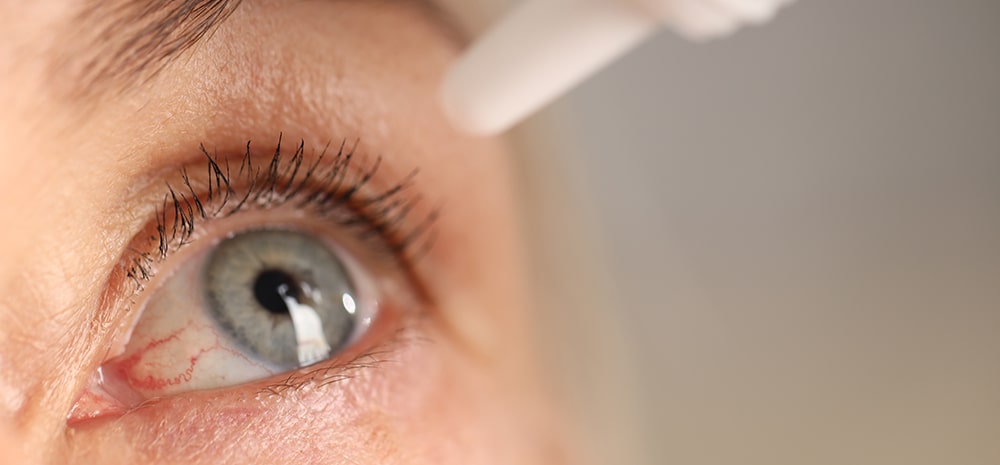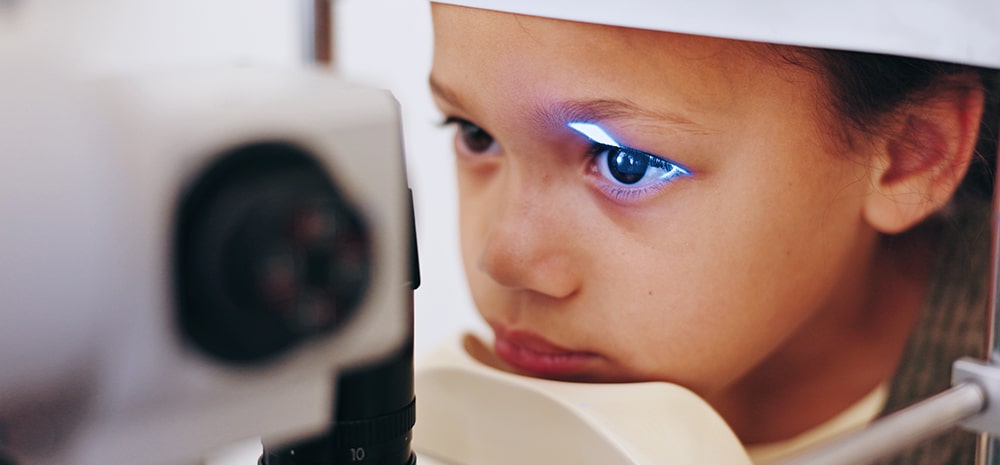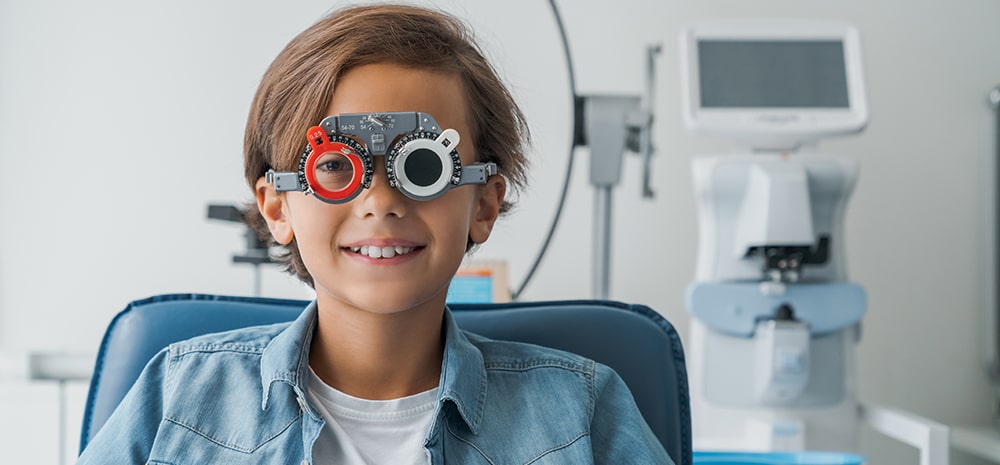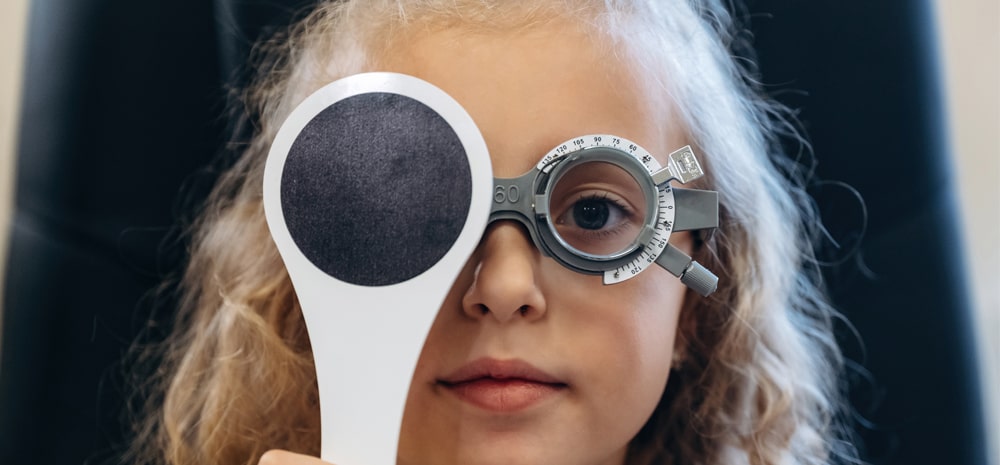

This is the question we hear more than almost any other in our pediatric eye clinic: “He doesn’t complain about his eyes — so why should I worry?”
And the honest answer is both simple and a little unsettling: because children almost never complain. Not because nothing is wrong, but because they have no reference point for what normal vision actually feels like. If a child has always seen the world a certain way, they assume everyone sees it the same way. They don’t know to tell you something is off, because as far as they’re concerned, nothing is.
Lazy eye — known medically as amblyopia — is one of the clearest examples of this. A child with amblyopia typically sees well out of one eye. The brain, receiving two different-quality images, quietly starts favouring the stronger eye and tuning out the weaker one. The child doesn’t squint dramatically. They don’t cover one eye. They just get on with their day. And in the background, the weaker eye gradually loses the visual development it was meant to build during childhood — development that, once the window closes, becomes much harder to recover.
That window is the whole point. And it doesn’t stay open forever.
What causes lazy eye?
There are a few different causes, but the ones we see most often in practice are:
- A significant difference in prescription between the two eyes. One eye might be considerably more short-sighted, long-sighted, or astigmatic than the other. The brain gravitates toward the clearer image and starts to ignore the blurrier one. There’s no squint to notice, no visible misalignment — nothing for a parent to catch. This is the type most often missed.
- A squint (strabismus). When one eye turns inward or outward, the brain suppresses the image from that eye to avoid double vision. Parents tend to notice a squint more readily because it’s visible. But mild or intermittent squints can easily be explained away as tiredness, until they’re not.
- Something physically blocking vision in one eye. This is less common but requires the most urgent attention.
In all of these cases, the underlying mechanism is the same: the brain isn’t receiving equal input from both eyes, so it picks a winner and sticks with it.
Signs worth paying attention to
There’s no single reliable checklist, because many children with lazy eye show no obvious signs at all. But these patterns are worth noting:
- Consistently closing or covering one eye, especially in bright light or when concentrating
- Tilting the head to one side in a way that seems habitual
- Sitting very close to screens or holding books unusually close
- Losing interest quickly in activities that require sustained visual focus
- Doing less well at school than expected, without an obvious explanation
The important caveat: many children with amblyopia show none of these. This is exactly why routine eye exams matter — not just when something seems wrong.
When should children have their eyes checked?
- Around 6–12 months — a basic check of visual responses and eye structure
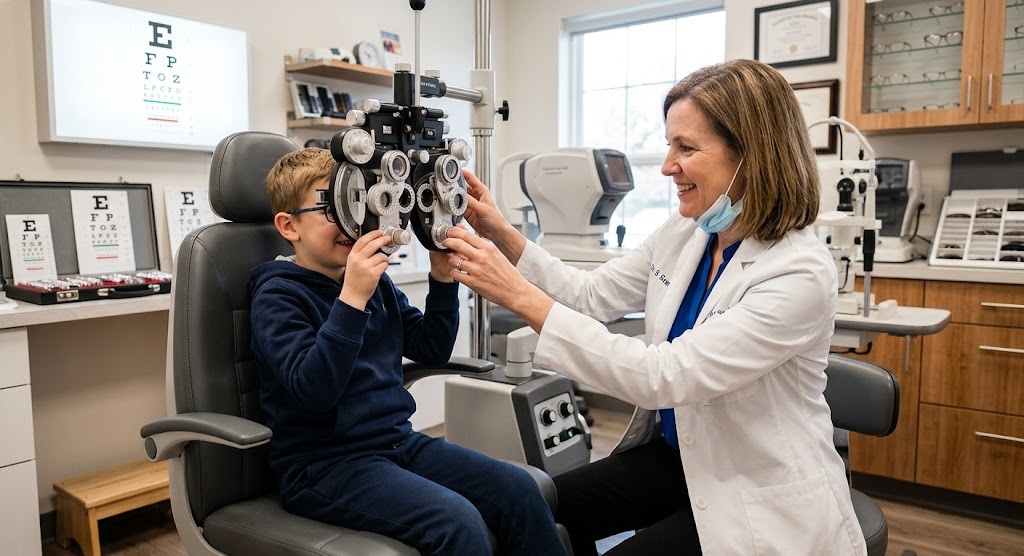
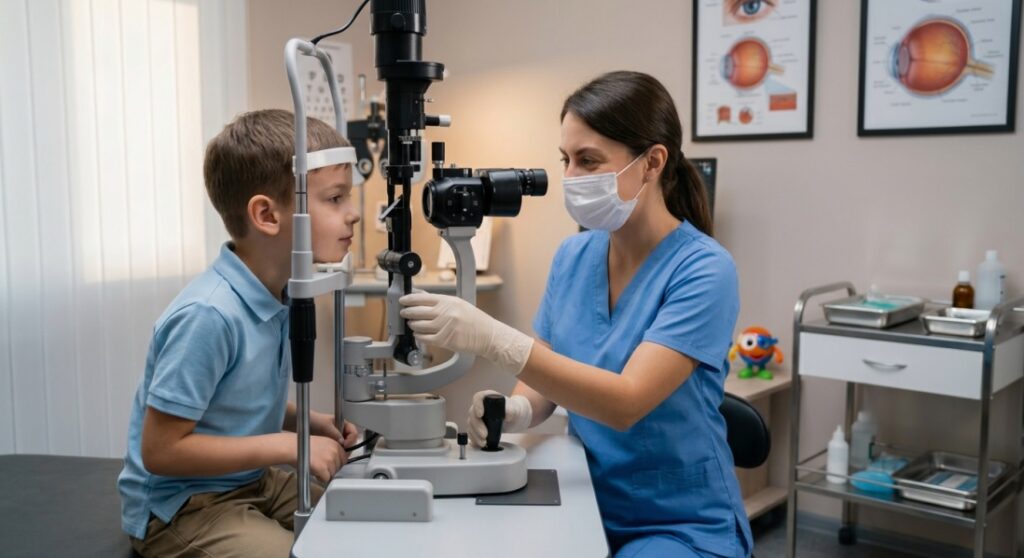
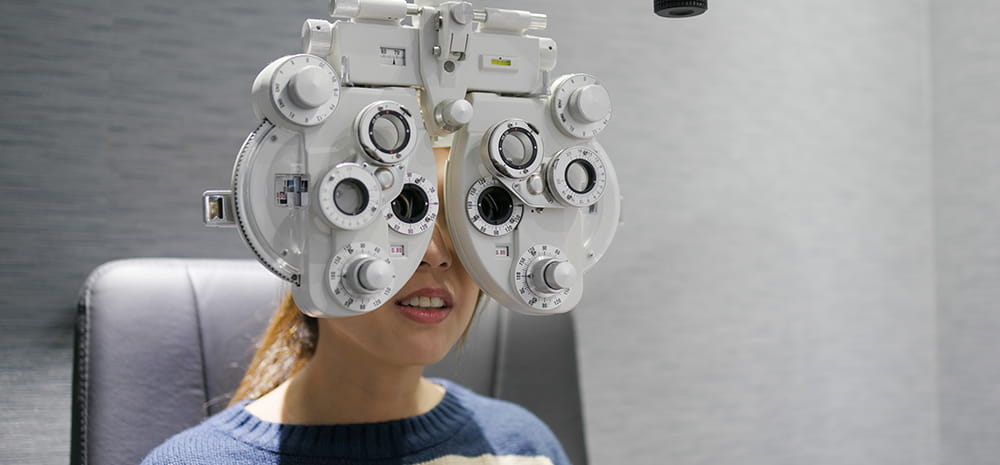
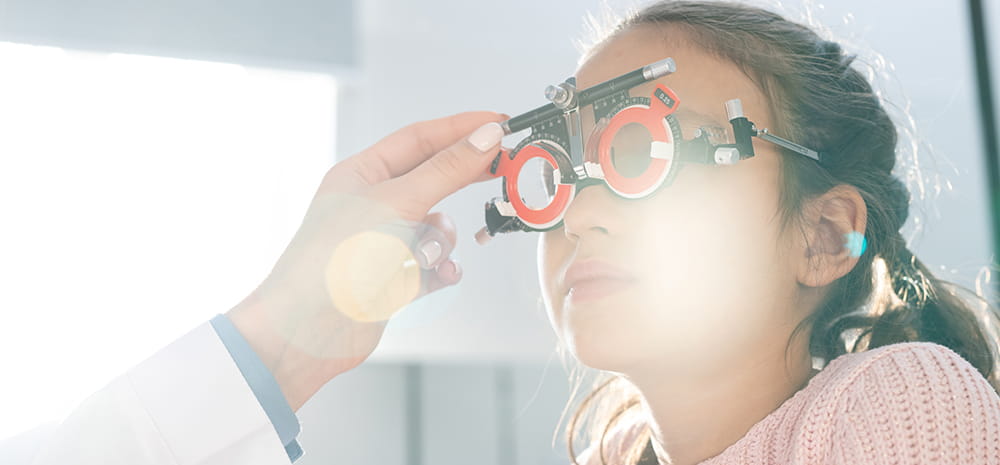
- Around age 3 — early signs of amblyopia or squint can be identified reliably
- Before starting school, and then annually
The visual system develops rapidly in the first seven or eight years of life. Treatment for amblyopia works most effectively during this window. The earlier a problem is caught, the more the brain can be redirected.
Treatment after the age of seven becomes progressively harder. Not impossible — we’ve achieved meaningful improvement in older children — but the results are generally less complete, and they require more time and effort.
How is lazy eye treated?
- Glasses first. In many cases, correcting the prescription difference is enough on its own to allow the weaker eye to catch up.
- Patching the stronger eye. By covering the eye the brain prefers, we force it to use the weaker one. Typically two to four hours a day, and it doesn’t need to be in one block.
- Atropine drops. An alternative to patching for children who resist wearing an eye patch.
- Vision therapy. A structured programme of guided visual exercises. At Orbit Eye Center, this is part of our broader treatment approach.
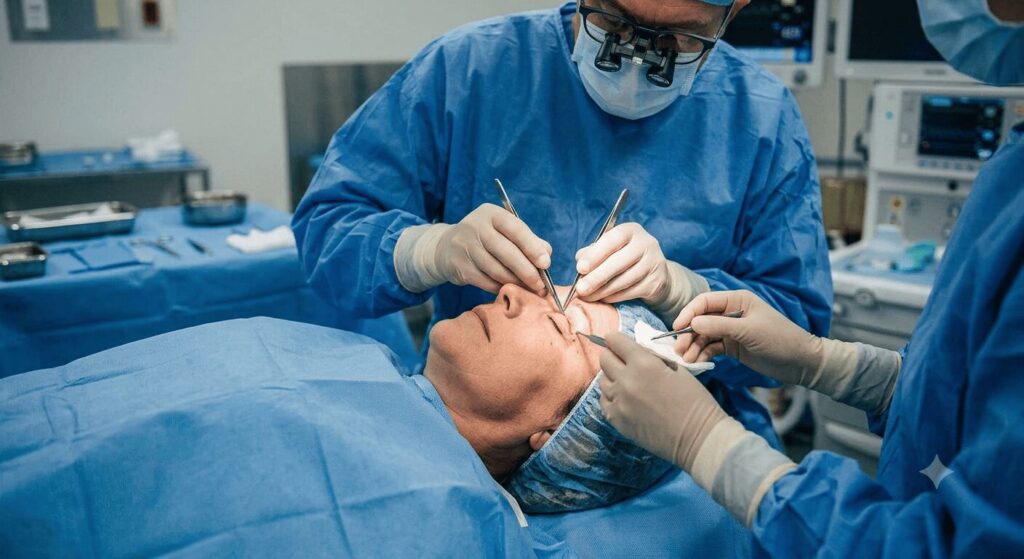
- Considered when there’s a significant squint not corrected by glasses, or a structural cause requiring intervention.
One thing worth saying plainly
If your child passed their school eye check — that’s a good sign, but it’s not a complete picture. School screenings regularly miss mild amblyopia and significant prescription differences.
If you’ve been meaning to get your child’s eyes properly checked and keep putting it off, let this be the nudge. Finding out early costs nothing. Finding out late sometimes costs a great deal.
We see children of all ages at Orbit Eye Center in Dubai Healthcare City, including infants and toddlers who can’t yet respond to a standard eye chart.