
A mother sat in our clinic a few weeks ago holding a note from her son’s school. Vision screening: passed. And yet she was there because her nine-year-old had quietly stopped reading for fun, something he used to do every night before bed.
That contradiction comes up more than people expect. School vision screenings are built to catch one specific thing well: whether a child can read letters on a chart from a distance. They’re not designed to catch how well the two eyes work together, whether the focusing system tires out after ten minutes of homework, or whether one eye is quietly doing less work than the other while the brain compensates. A child can have technically normal distance vision and still struggle to track a line of text without losing their place, or get headaches every time they sit down to study.
To be fair, not every child who dislikes reading has a vision problem. Plenty of kids avoid books because they find them boring, or because an attention or learning difference is making the words hard to process for reasons that have nothing to do with the eyes. We’d rather say that plainly than suggest every reluctant reader needs a specialist. But there’s a specific pattern worth paying attention to before assuming it’s just a phase.
Signs that point toward vision rather than preference
- Headaches or eye strain that show up specifically during or after reading or screen time, not at other points in the day
- Losing their place frequently, or using a finger to track text well past the age when that’s typical
- Sitting unusually close to the TV or holding books close to the face
- Tilting the head consistently, or closing/covering one eye to look at something
- Complaining that words “move” or double up on the page
- Avoiding tasks that require sustained near focus, like puzzles or coloring, even when they enjoy the activity in short bursts
None of these on their own confirms anything. Together, and especially if they’ve developed gradually rather than being lifelong habits, they’re worth a proper look.
What a comprehensive exam checks that a screening doesn’t
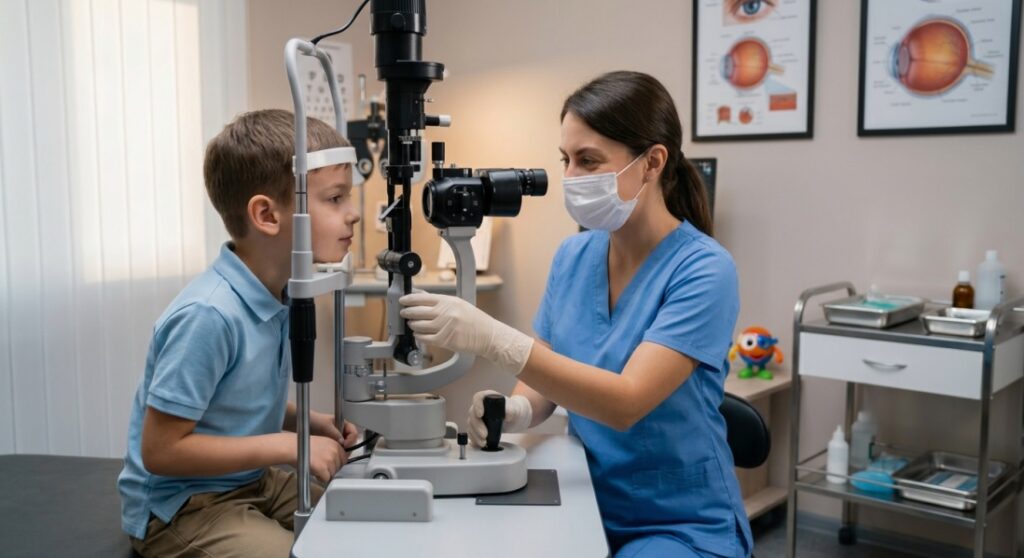
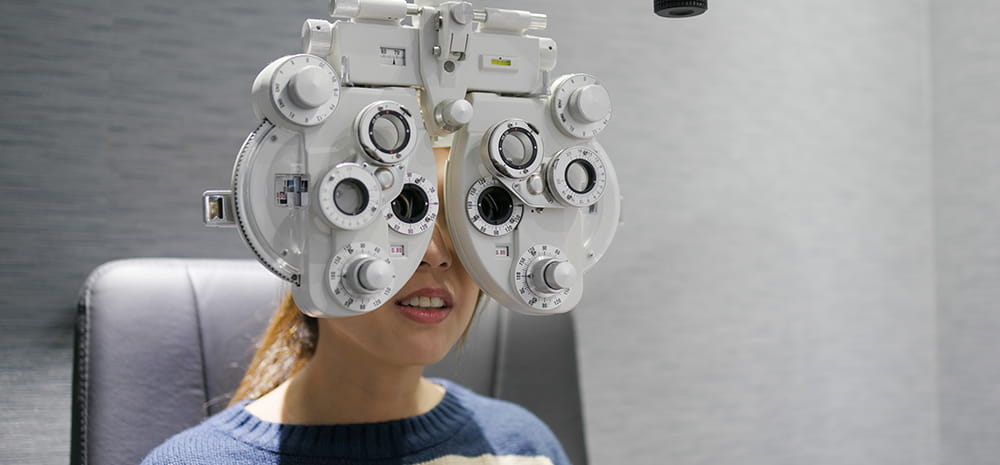
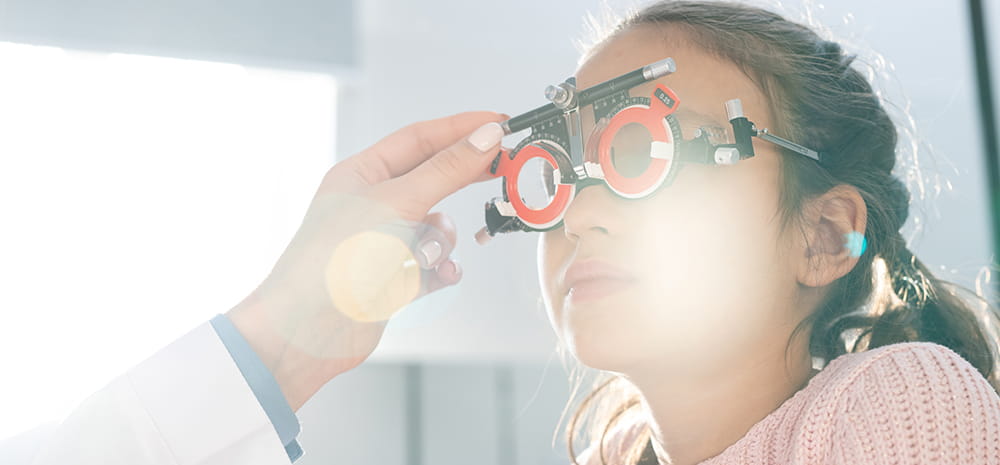
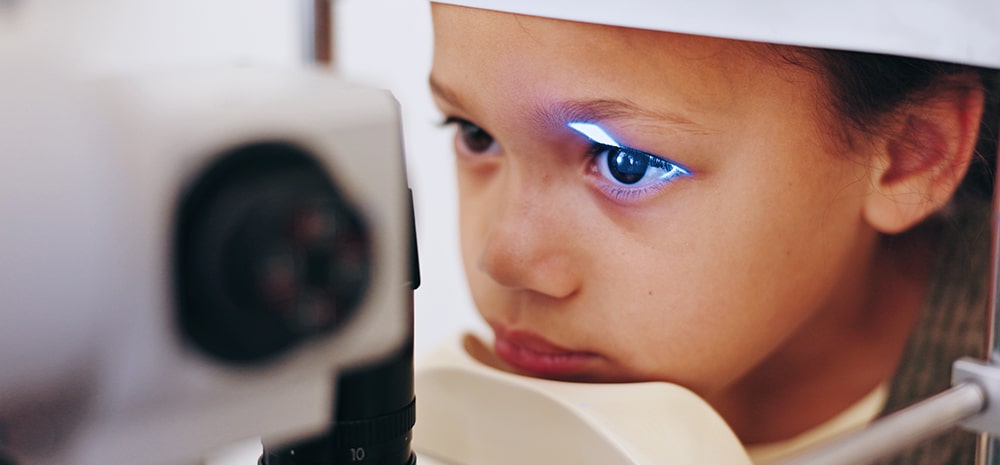
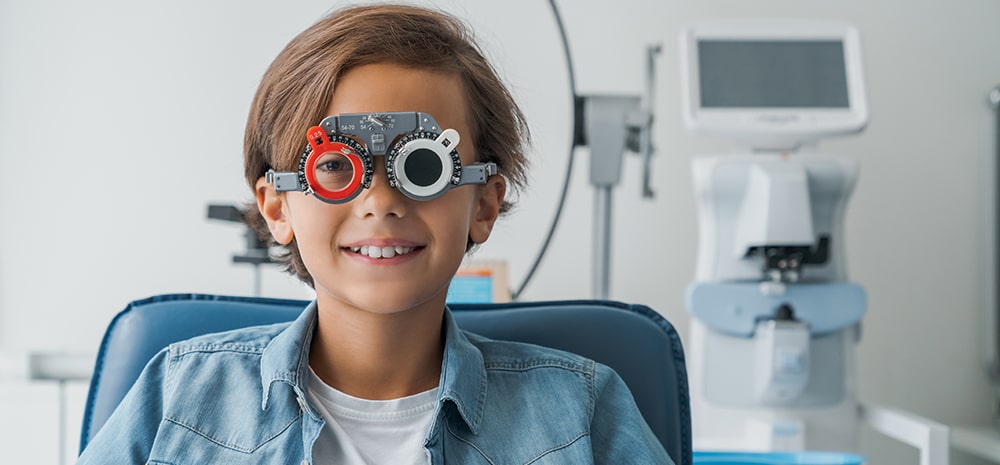
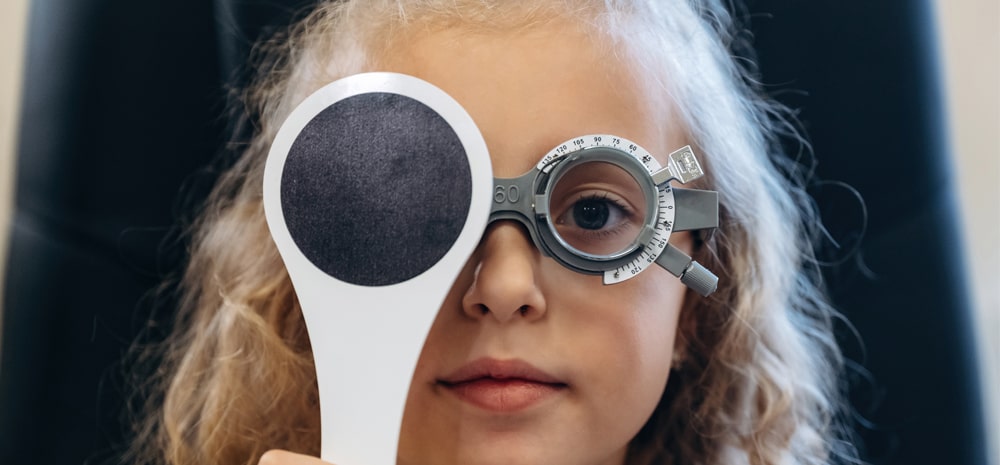
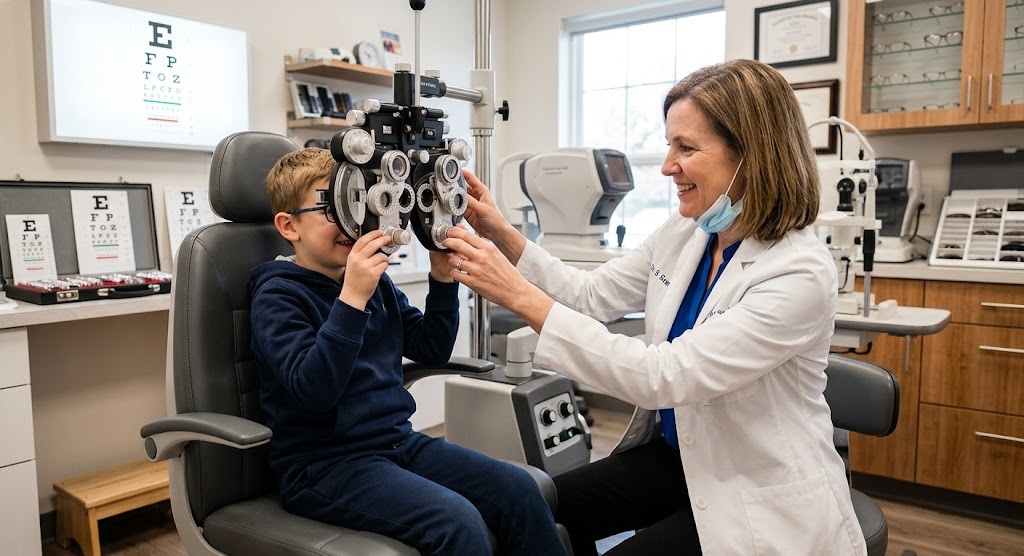
A full pediatric eye exam goes beyond the acuity chart. It looks at how the eyes align and track together, how well they converge on a near object like a book, whether the focusing muscles are working efficiently, and whether there is amblyopia (lazy eye) or strabismus (eye misalignment) that hasn’t become obvious yet. Some of these conditions have no visible signs at all in early stages. They just quietly make near work harder, which shows up as a child who seems distracted, tired, or “just not that into reading.”
This is also where vision therapy comes in, which is different from simply prescribing glasses. If the issue is how the eyes team up and focus rather than a straightforward need for correction, glasses alone won’t fix it. Orbit’s vision therapy program, run by our optometrists alongside Dr. Walid, is built specifically around retraining that coordination through structured in-clinic sessions, and it’s one of the more overlooked reasons a bright, motivated child can still be struggling in the classroom.
With the school year starting back up, this is a reasonable window to get ahead of it rather than waiting until report cards raise the question. A comprehensive pediatric eye exam takes under an hour and covers all of this in one visit.
Book a comprehensive children’s eye examination with Orbit Eye Center for Pediatrics & Oculoplasty.