

It starts with a comment from a colleague. Or a photo from a family gathering where you look exhausted even though you weren’t. Or you catch yourself in a lift mirror at noon on a regular Tuesday and think — I look like I haven’t slept in a week.
For a lot of patients who come to see us at Orbit, that’s the moment. Not a dramatic one. Just a quiet realisation that what they’re seeing in the mirror no longer matches how they actually feel.
Heavy, drooping upper eyelids are one of the most common concerns I see in oculoplastic practice — and one of the most misunderstood. Many people assume it’s purely cosmetic, something you address because you want to look younger. But the reality is more layered than that.
When it becomes a medical issue, not just a cosmetic one
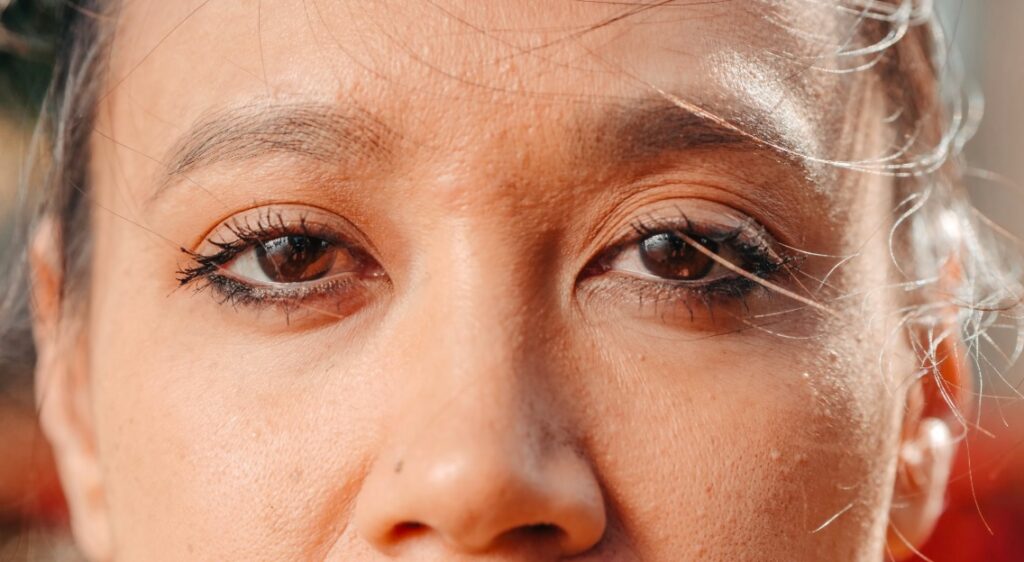
The skin around your eyes is the thinnest on your face. It ages faster, loses elasticity earlier, and is more affected by sun exposure and dry air — both of which Dubai has in abundance. Over time, the upper eyelid can accumulate excess skin that droops down, sometimes to the point where it actually sits on your lashes or begins to obstruct your peripheral vision.
When that happens, blepharoplasty isn’t a vanity procedure. It becomes a functional correction.
I’ve seen patients who’ve been squinting to see properly for years, compensating by tilting their head slightly back or raising their eyebrows constantly — which eventually causes forehead tension and headaches. Once we address the eyelid, these problems often resolve on their own.
The distinction matters because it can affect whether your procedure is covered by insurance and how we plan the surgery itself.
What blepharoplasty actually involves
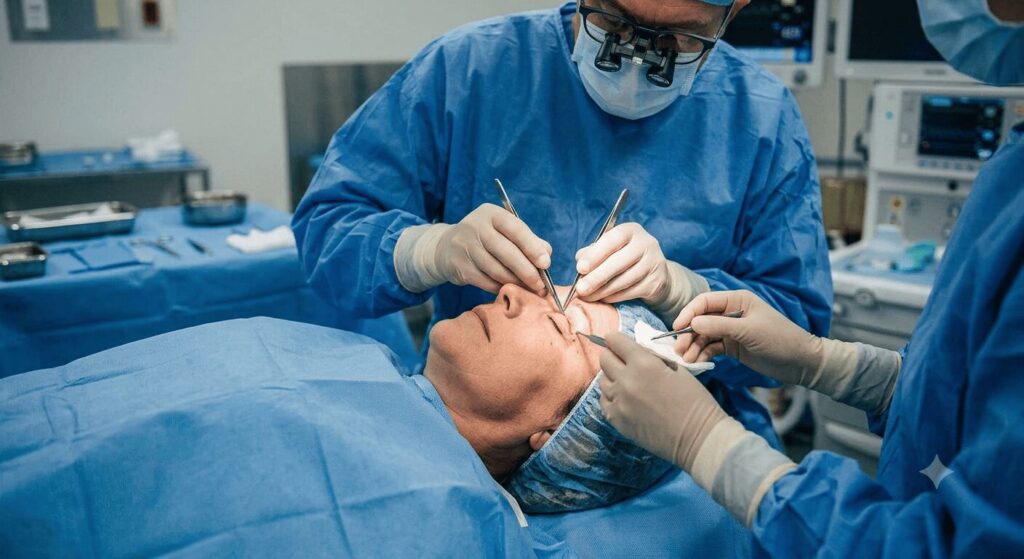
In simple terms, an upper blepharoplasty removes the excess skin, and sometimes a small amount of fat, from the upper eyelid. The incision is made along the natural crease of your eyelid — a line that already exists in your anatomy — so when everything heals, there’s essentially nothing to see.
Lower eyelid surgery is slightly different in nature. It’s more often about repositioning fat that has shifted forward over time, creating that puffy, baggy look under the eyes. Depending on what’s causing it, we may approach it from inside the eyelid, which means no external incision at all.
What we’re never trying to do is make someone look operated-on, startled, or like a different person. The goal is always a version of yourself that looks rested and refreshed — the way you looked ten years ago, or the way you look on a good day with good light.
The part patients ask about most: the recovery
Most people are surprised by how manageable it actually is. You’ll have some swelling and bruising for the first week or two — this is normal and expected. Cold compresses, keeping your head elevated when sleeping, and avoiding anything that strains your eyes makes the first few days much more comfortable.
Most patients feel presentable enough to go out within ten to fourteen days, though the final result takes a few months to fully settle. I always tell patients: the first week looks dramatic, the second week looks much better, and by week three most people around you won’t notice anything has happened — except that you look well-rested.
Who is it right for — and who should wait
Good candidates are generally people who are in good overall health, don’t have uncontrolled dry eye, thyroid disease, or certain clotting conditions, and have realistic expectations about what surgery can and can’t do. Blepharoplasty addresses the eyelid itself — it doesn’t lift a heavy brow, change the bone structure, or address fine lines on the cheek.
Age is less of a fixed criterion than people expect. Some patients come in their late thirties with significant drooping due to genetics. Others are in their sixties and still have good skin tone. What matters is the anatomy in front of me, not the number on a chart.
I do encourage anyone considering this to have a proper consultation with an oculoplastic surgeon specifically — not just a plastic surgeon or a dermatologist. The eyelid is a highly specialised structure. The margin for error is small, and the functional consequences of getting it wrong go beyond appearance.
One honest thing worth saying
Blepharoplasty is not a decision to rush into, and it shouldn’t feel like pressure. Some patients come in wanting surgery and I tell them they’re not ready for it yet. Others come in expecting a simple fix and need a more involved conversation about their anatomy and expectations.
If the way your eyelids look is genuinely affecting how you feel or how clearly you see, book a consultation. Not to commit to anything — just to understand what’s actually going on and what your options are.
We’re at Orbit Eye Center in Dubai Healthcare City. You can reach us through the website or call to arrange an appointment.