
Most parents in Dubai don’t think about their child’s vision until something goes wrong. A teacher flags a problem. A child starts squinting at the TV. Or, in younger babies, the eyes don’t seem to track the way they should. By that point, a lot can already be happening under the surface that an earlier check would have caught.
This guide covers what to look for in a top-rated eye hospital in Dubai, the specific questions worth asking a pediatric eye specialist, and how eye conditions in children — from infants to school-age kids — get properly diagnosed and treated.
What Makes an Eye Hospital in Dubai Worth Trusting
Dubai has no shortage of medical facilities, but ophthalmology clinics vary significantly in whether they have the equipment, staff, and experience to handle pediatric cases. Children’s eyes are not just smaller versions of adult eyes. The diagnostic process is different, the equipment has to be adapted, and the approach to gain cooperation from a three-year-old requires actual pediatric experience — not just a general ophthalmology background.
When evaluating an advanced eye care hospital in Dubai, these are the things that matter:
Sub-specialty pediatric ophthalmology. A general eye clinic can manage adult refractive errors and cataracts. Childhood strabismus (crossed eyes), amblyopia (lazy eye), congenital glaucoma, and retinopathy of prematurity require a different level of expertise. The American Academy of Ophthalmology notes that amblyopia affects roughly 2–3% of the population and is most treatable before age seven — which means delayed diagnosis has long-term consequences.
Infant-capable diagnostic tools. Cycloplegic refraction, indirect ophthalmoscopy, and retinoscopy in non-verbal children need practitioners who do this regularly. Occasional pediatric cases in an adult-focused clinic are not the same thing.
A patient environment that works for children. This sounds minor. It isn’t. A child who is frightened or uncooperative cannot be properly examined. Clinics that understand this design their waiting areas and examination approach accordingly.
Orbit Eye Center and Pediatric Eye Care in Dubai
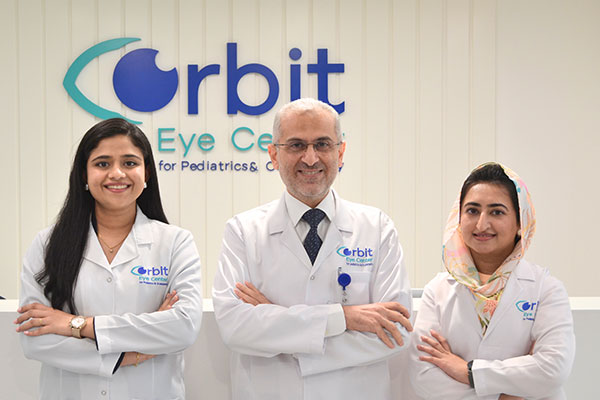
Orbit Eye Center is one of the kids dedicated eye hospitals in Dubai that focuses on children’s eye health as a core part of its practice — not a side service. For parents searching for a pediatric eye specialist in Dubai, Orbit combines clinical expertise with a child friendly environment and the kind of diagnostic range that pediatric cases actually require.
The team at Orbit handles everything from routine pediatric screening to complex conditions including:
- Amblyopia (lazy eye) assessment and treatment
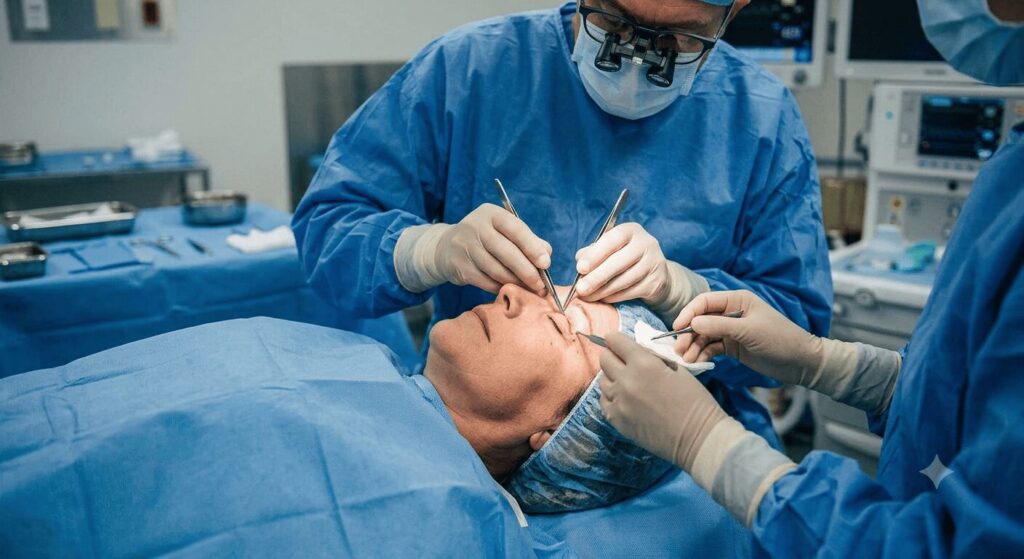
- Strabismus evaluation and surgical correction
- Congenital and developmental eye conditions
- Refractive errors in school-age children (myopia, hyperopia, astigmatism)
- Nasolacrimal duct obstruction (a common cause of watery eyes in infants)
- Retinopathy of prematurity (ROP) screening for premature newborns
- Pediatric glaucoma
Parents looking for eye hospital for kids treatment in Dubai will find that Orbit’s approach isn’t to rush a child through a standard adult protocol. The examination is adapted to the child’s age, and parents are kept involved throughout.
Eyes Treatment for Infants in Dubai — What’s Different
Infant eye care is an area where many parents simply don’t know what’s available, or don’t realize how early conditions can present. The World Health Organization estimates that approximately 75% of visual impairment worldwide is either preventable or treatable — but timing matters enormously.
For newborns and infants under 12 months, the main concerns include:
Retinopathy of prematurity (ROP). Premature babies, particularly those born before 32 weeks, face a real risk of abnormal blood vessel growth in the retina. The UK Royal College of Ophthalmologists guidelines recommend screening starting at 31 weeks gestational age or four weeks after birth, whichever is later. Orbit provides ROP screening and follows UAE neonatal protocols for at-risk infants.
Congenital cataracts. These can be missed at birth if screening isn’t thorough. When present, they need early intervention — sometimes within weeks — to prevent permanent amblyopia from developing while the visual system is still forming.
Nasolacrimal duct obstruction. This is the most common cause of persistent watery or sticky eyes in infants. Around 6% of newborns have incomplete development of the tear drainage system. Most resolve with conservative management, but a small percentage require a minor procedure to open the duct. Orbit’s team manages this with a non-invasive approach first and surgical probing only when necessary.
Ptosis (drooping eyelid). Congenital ptosis can block the visual axis and cause amblyopia if untreated. Early assessment determines whether intervention is needed.
Pediatric Eye Specialist in Dubai — What the Examination Actually Involves
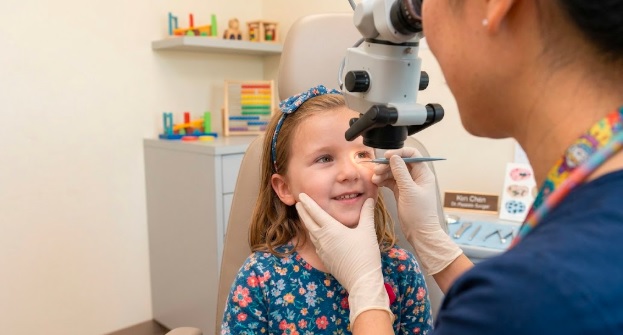
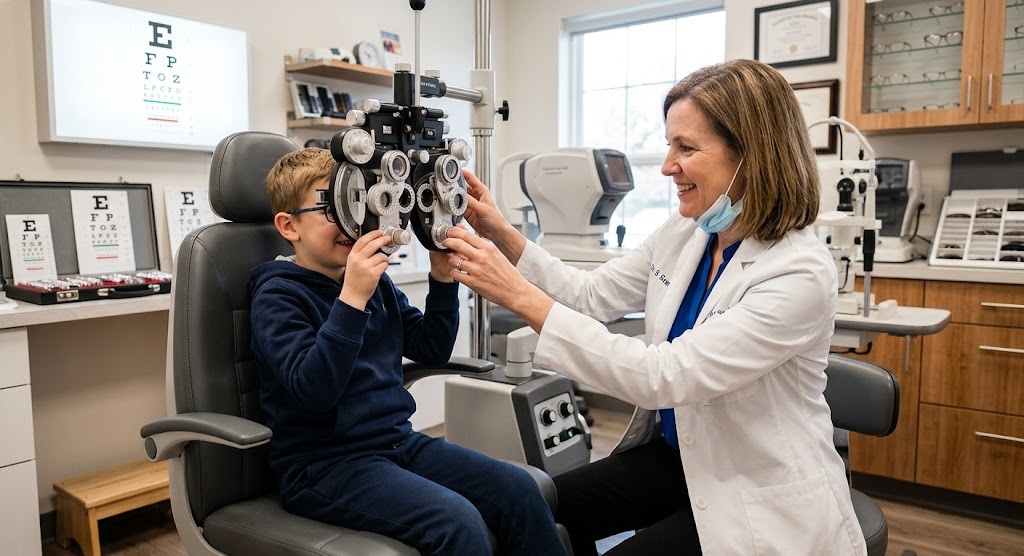
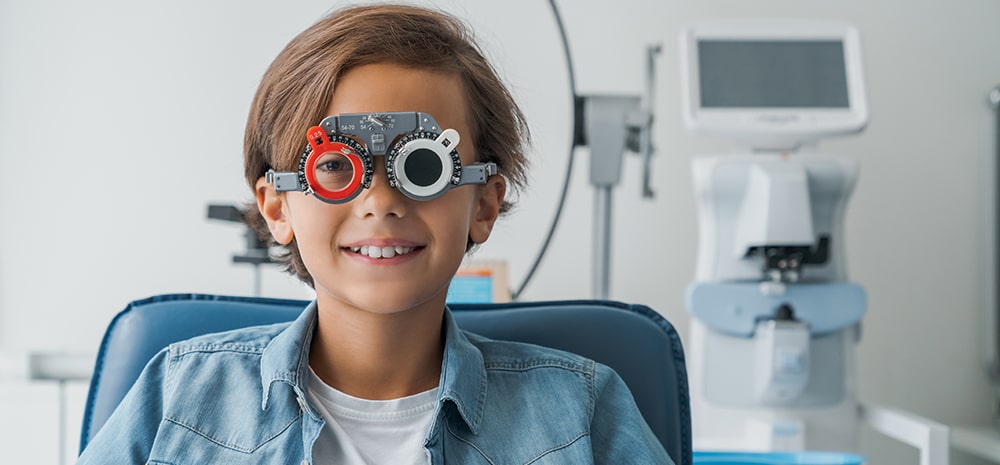
A lot of parents arrive at a pediatric eye clinic expecting the same experience they had at optometrist for adults — read the chart, get a prescription. In children, especially young ones, it’s more involved than that.
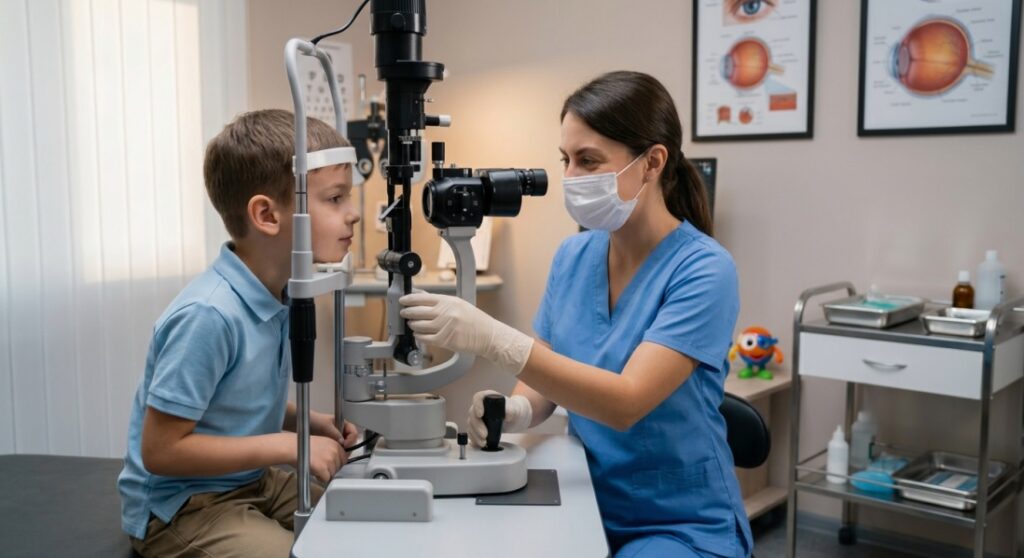
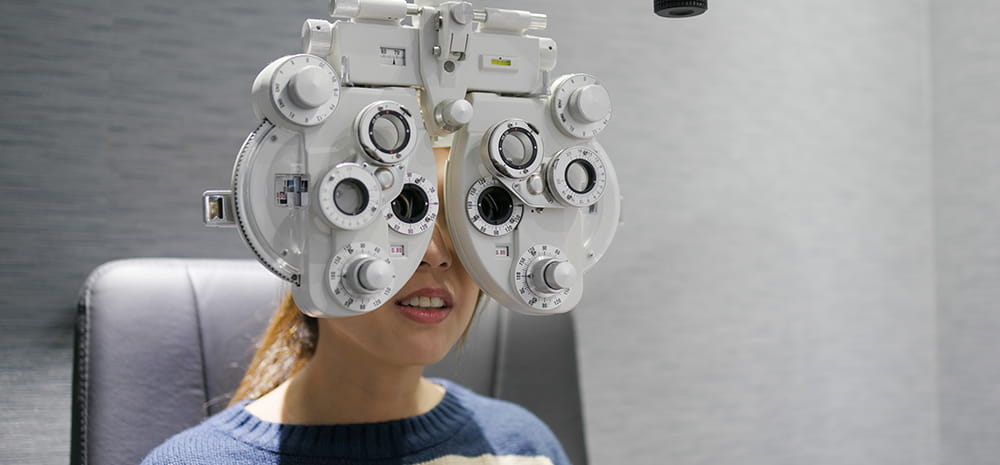
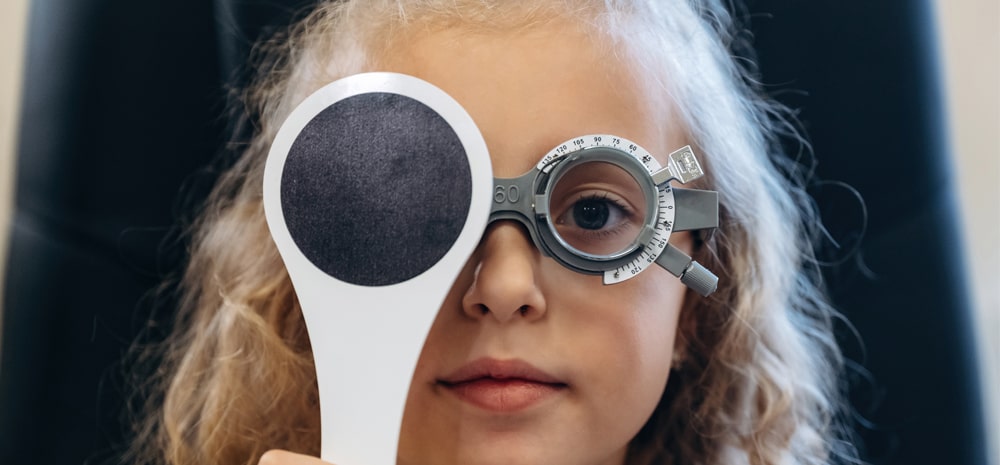
A thorough pediatric eye evaluation at Orbit typically includes:
- Visual acuity testing using age-appropriate methods (preferential looking tests for infants, picture-based charts for toddlers, standard charts for older children)
- Cycloplegic refraction — eye drops that temporarily dilate and relax the focusing muscles to get an accurate measurement of refractive error that children’s accommodation (focusing reflex) would otherwise mask
- Ocular motility assessment — checking how the eyes move and work together
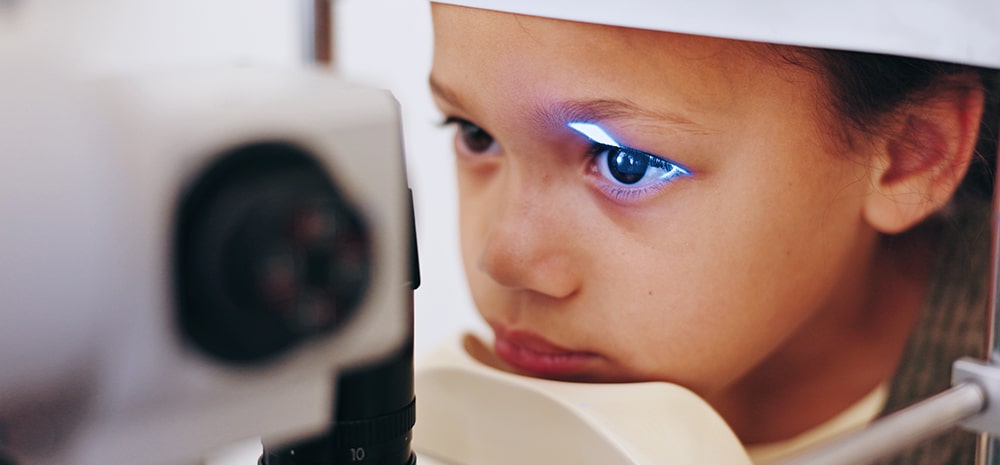
- Slit-lamp examination when age permits
- Fundus examination to check the optic nerve and retina
- Intraocular pressure when indicated
The examination is paced to the child. Some three-year-olds sail through it; others need the appointment broken into stages. Orbit’s team has experience with both.
Myopia in Dubai’s School-Age Children — A Growing Concern
The global prevalence of myopia in children has increased substantially over the past two decades. A 2021 study published in British Journal of Ophthalmology projected that by 2050, roughly half the world’s population will be myopic, with the highest rates in East Asia but rising trends across the Middle East and Southeast Asia as well.
For children in Dubai, screen exposure and reduced time outdoors are the same risk factors identified globally. Research from the Brien Holden Vision Institute points to outdoor time specifically — not just reduced screen time — as protective against myopia progression. Two hours of outdoor time daily is the figure most cited in current literature.
At Orbit, myopia management in children goes beyond prescribing glasses. For children with progressive myopia, options include:
- Orthokeratology (Ortho-K) — specially designed rigid contact lenses worn overnight that temporarily reshape the cornea, allowing clear daytime vision without glasses or standard contacts
- Low-dose atropine therapy — 0.01% atropine eye drops have shown consistent evidence for slowing myopia progression in multiple randomized controlled trials, including the landmark ATOM2 study from Singapore National Eye Centre
- Multifocal soft contact lenses for appropriate candidates
The goal isn’t just correction. It’s slowing the progression of myopia to reduce the long-term risk of high myopia and its associated complications — retinal detachment, maculopathy, glaucoma.
Vision Therapy at Orbit Eye Center
Vision therapy is available in Dubai, and Orbit offers it as part of its pediatric services. It’s not a replacement for optical correction or surgery where those are indicated, but for specific conditions — particularly convergence insufficiency, binocular vision problems, and certain cases of amblyopia — structured vision therapy produces measurable results.
The Convergence Insufficiency Treatment Trial (CITT), funded by the US National Eye Institute, found that office-based vision therapy significantly outperformed home-based pencil push-ups and placebo therapy in treating convergence insufficiency in children. This is the kind of evidence-based approach Orbit follows: using vision therapy where the research supports it, rather than applying it universally or dismissing it categorically.
Frequently Asked Questions
Do children need regular eye exams?
Yes — and the “no symptoms” argument doesn’t hold up well for kids. Children with significant refractive errors or early amblyopia often show no obvious symptoms. They adapt. A child who has never seen clearly doesn’t know they’re seeing poorly; they assume everyone sees the way they do. The American Optometric Association recommends a baseline eye exam at six months, again at age three, and at age five before starting school. After that, annually or as recommended by the examining doctor.
What causes watery eyes in babies?
The most common cause is nasolacrimal duct obstruction — a blockage in the tear drainage channel that runs from the inner corner of the eye to the nose. In most babies this resolves on its own by 12 months. Massage technique (Crigler massage, applied correctly) can help. If it persists beyond 12–18 months, or if there are recurrent infections alongside the tearing, a minor procedure to probe and open the duct is usually effective and straightforward. Less commonly, watery eyes signal congenital glaucoma — which is why persistent tearing, particularly if accompanied by light sensitivity or a large or cloudy-looking cornea, should be evaluated promptly rather than waited out.
Is vision therapy available in Dubai?
It is. Orbit Eye Center provides structured vision therapy for appropriate candidates, including children with convergence insufficiency, accommodative problems, and certain types of amblyopia. Not every child who struggles in school needs vision therapy, and not every reading difficulty is a vision problem. But for the subset of children with genuine binocular vision dysfunction, properly administered therapy can make a real difference to their functioning in school and in daily life.
What age should a child get their first eye exam?
Six months is the recommended age for a first formal eye assessment, according to both the American Academy of Ophthalmology and the American Association for Pediatric Ophthalmology and Strabismus (AAPOS). At six months, an ophthalmologist can check for congenital problems, significant refractive errors, and alignment issues. The next milestone is around age three, and again just before school entry at five. These timelines matter because the visual system is actively developing through early childhood, and the window for treating conditions like amblyopia effectively narrows significantly after age seven to eight.
Can screen time damage children’s eyesight?
The honest answer is: not directly, not in the way the question usually implies. Current research does not support the idea that screens cause structural damage to the eyes or permanently damage vision. What screens do is reduce outdoor time (which is protective against myopia) and cause significant eye strain and dry eye symptoms from reduced blinking. The concern with myopia is the reduced outdoor light exposure, not the screens themselves. So the AAO’s current guidance doesn’t set a specific “screen limit” based on eye damage, but recommends the 20-20-20 rule (every 20 minutes of near work, look at something 20 feet away for 20 seconds), outdoor time, and regular check-ups for children already showing signs of myopia. For children with progressive myopia, screen time is part of the conversation — but as one factor among several, not the sole driver.
Getting Started at Orbit Eye Center
If your child hasn’t had a formal eye examination, or if you’ve noticed anything — squinting, one eye turning in or out, complaints about headaches, holding devices very close — an assessment at a dedicated pediatric eye hospital is the right next step.
Orbit Eye Center’s team works with children from newborn through teenagers. Appointments can be scheduled for routine screening, specific concerns, or follow-up management of existing conditions. The clinic is equipped for the full range of pediatric eye conditions and follows current international clinical guidelines for diagnosis and treatment.
For parents based in Dubai looking for a genuinely child-focused ophthalmology service, Orbit is the kind of place where your child won’t be treated as an adult patient. The approach here is built around kids from the ground up.